Rules
The Comprehensive Rules (CR), arranged by concept. Each section ends with the rule numbers to read in full. Most card examples come from the CR itself. Click a card name to see the card and its current text.
What wins a conflict
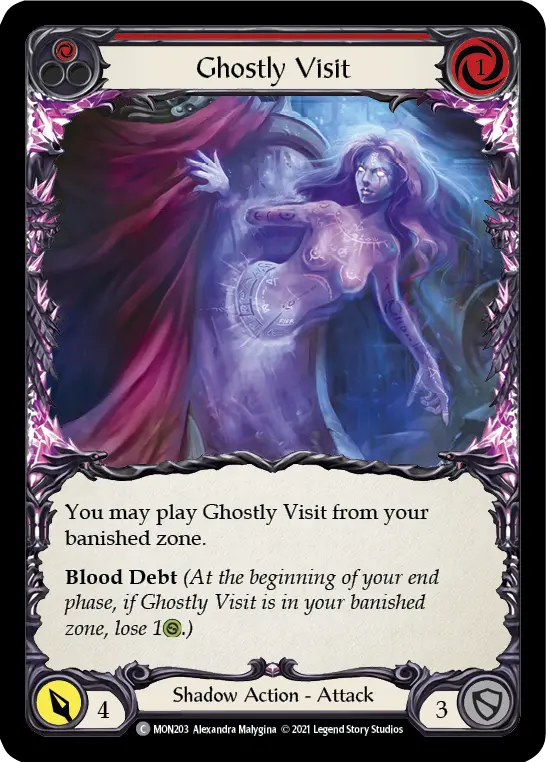
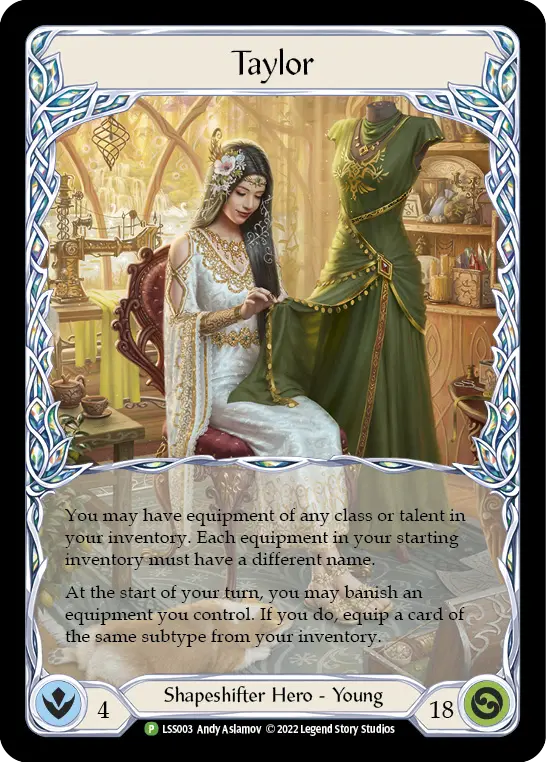
- Tournament rules beat card text, and card text beats the CR (CR 1.0.1a–b). Example: the CR says you play cards from hand or arsenal, but Ghostly Visit says you may play it from your banished zone. The card wins. Example: Taylor lets you put equipment of any class into your inventory, but the Card Legality Policy (TRP 7) says a banned card can't be in a card-pool at all. The tournament rule wins, so Taylor still can't bring a banned piece of equipment.
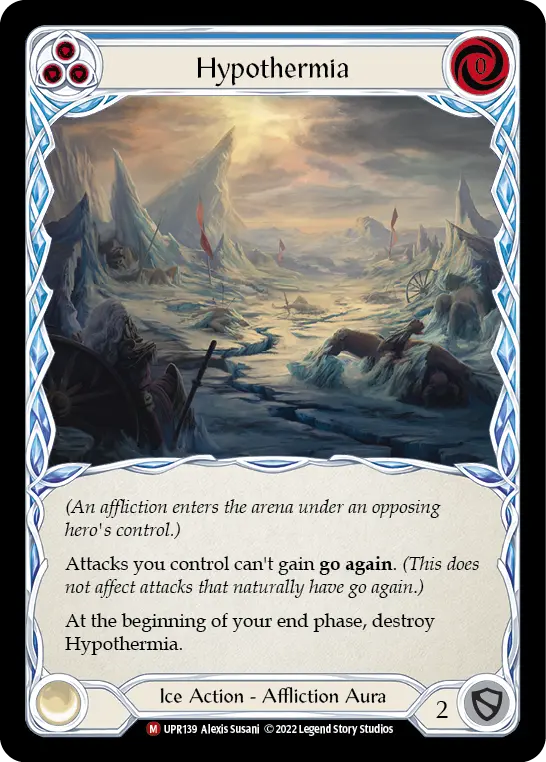
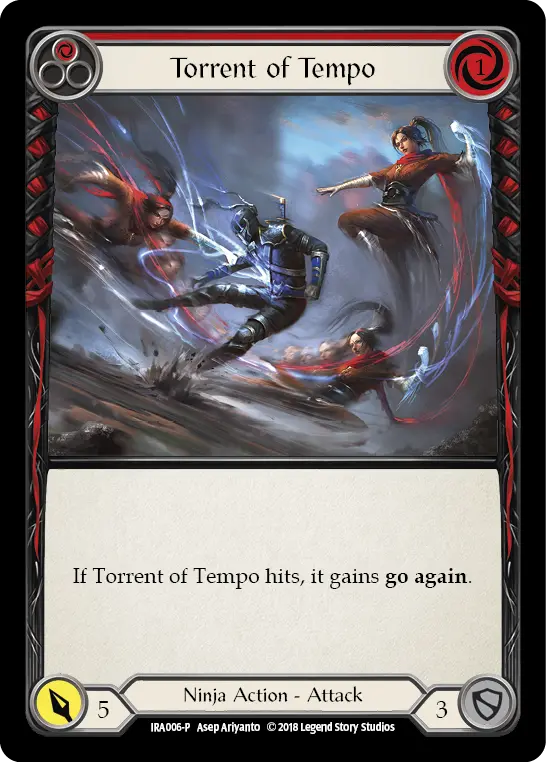
- A restriction beats a requirement, and a requirement beats an allowance (CR 1.0.2). A "can't" beats a "must", and a "must" beats a "may". If one effect says you can't play cards from your banished zone and another says you may, you can't. Example: Hypothermia says your attacks can't gain go again. If Torrent of Tempo hits while you have Hypothermia, it doesn't get the go again it gives itself on hit.
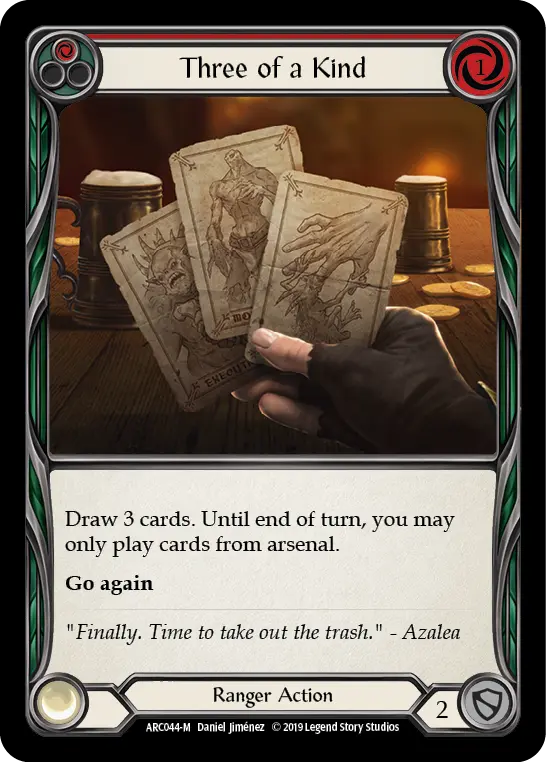
- "Only" is a restriction. "You may only play cards from arsenal" means you can't play from anywhere else, even if another effect lets you (CR 1.0.2a). Example: after Three of a Kind, you can't play Ghostly Visit from your banished zone for the rest of the turn.
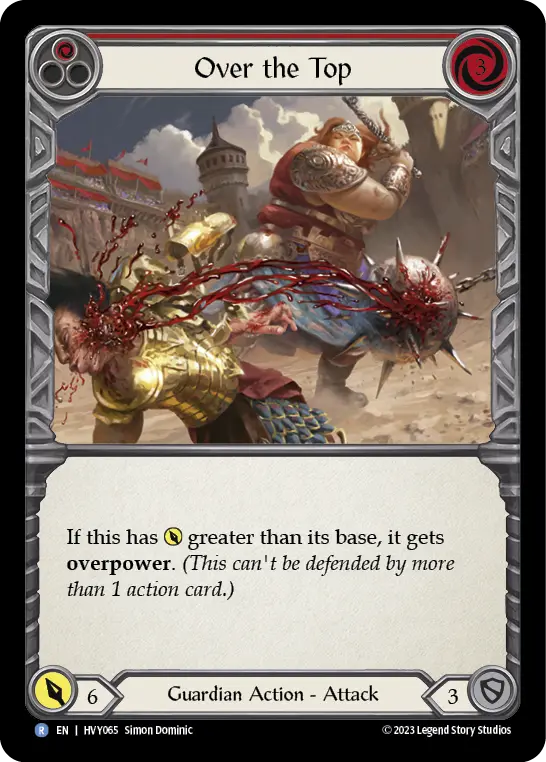
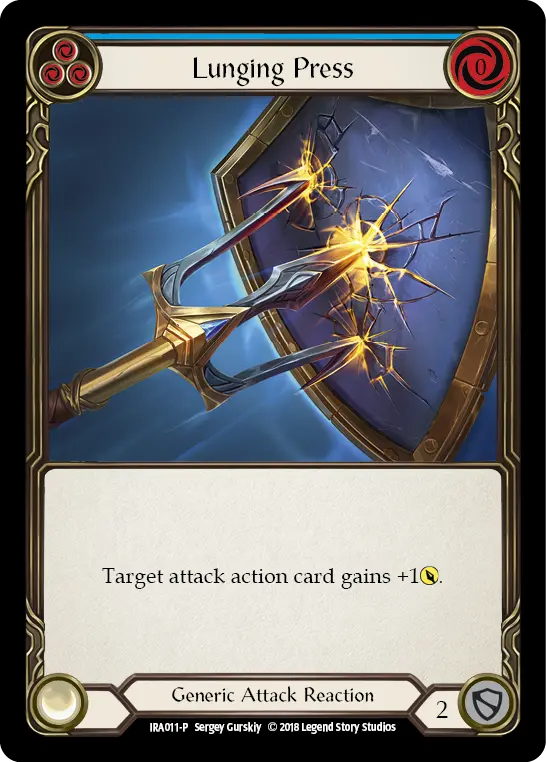
- Restrictions aren't retroactive. An attack that gains overpower after two action cards defend it keeps both defenders (CR 1.0.2b). Example: Over the Top gets overpower once its power is above its base. If Lunging Press pumps it in the reaction step, it gains overpower, but both defenders stay.
Players, objects and ownership
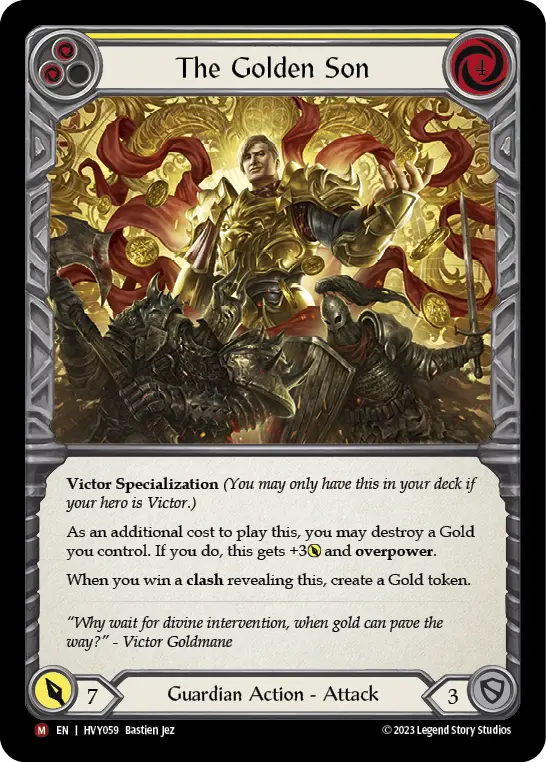
- "You" means the controller of the object. If nothing controls it, "you" means the owner. A card revealed in a clash has no controller, so its "you" is its owner (CR 1.1.2b). Example: The Golden Son says "when you win a clash revealing this, create a Gold token". Revealed from the deck, it has no controller, so its owner is the one who has to win the clash.
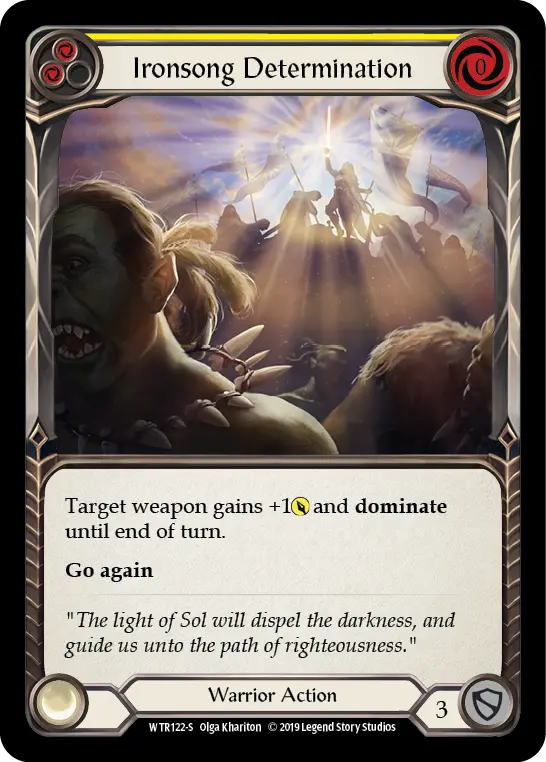
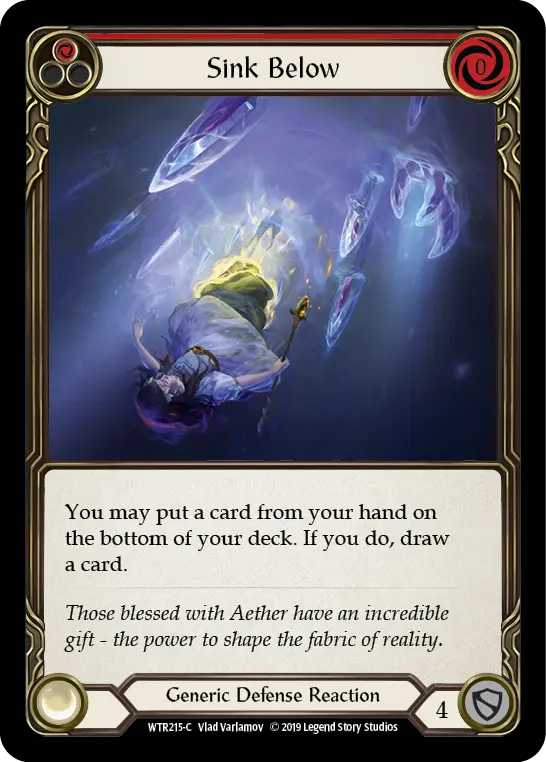
- Card-pool: every card's supertypes have to be a subset of the hero's supertypes. Cards with no supertypes are generic and fit any hero (CR 1.1.3). Example: Ironsong Determination is a Warrior card, so only a Warrior hero can use it. Sink Below is Generic and fits any deck.
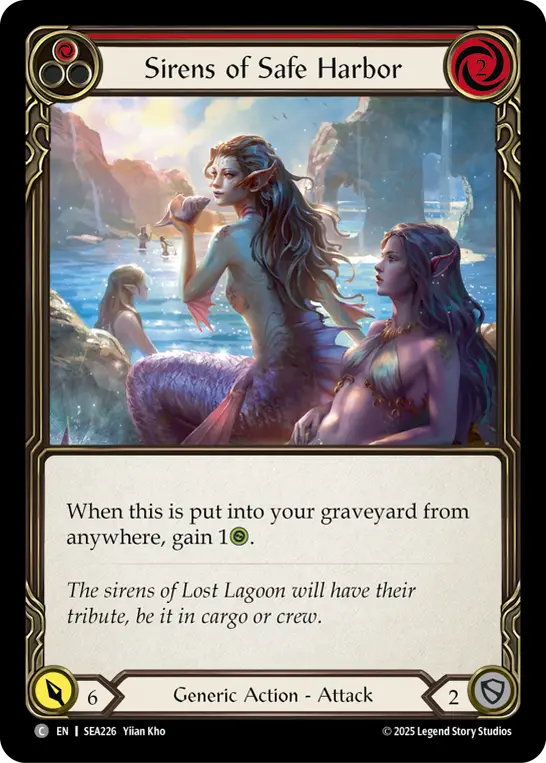
- Owner and controller: a card only has a controller while it's in the arena or on the stack. A layer is controlled by the player who put it on the stack (CR 1.2.1, 1.3.1b, 1.6.1b). Example: Sirens of Safe Harbor triggers when it's put into "your" graveyard. If you play your opponent's copy, you control it, so when it goes to their graveyard it doesn't trigger for anyone (CR 3.0.7a).
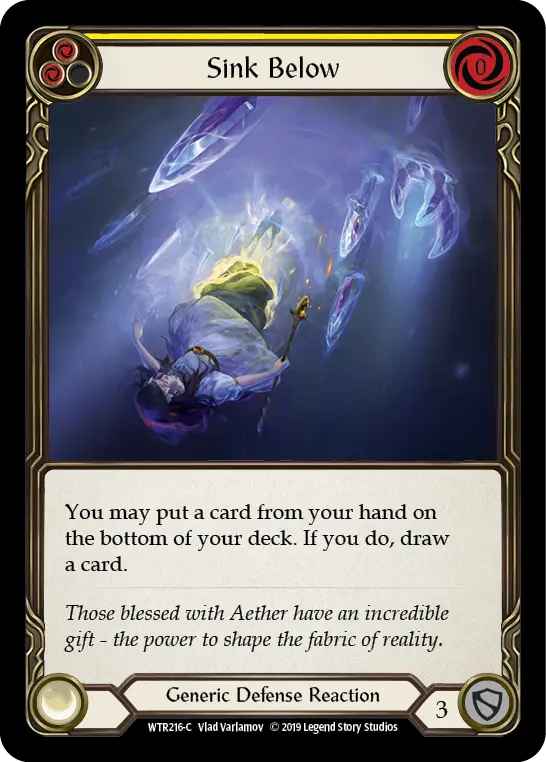
- Distinct cards: cards with a different name or pitch are different cards. A red Sink Below and a yellow Sink Below are separate cards for copy limits (CR 1.3.4).
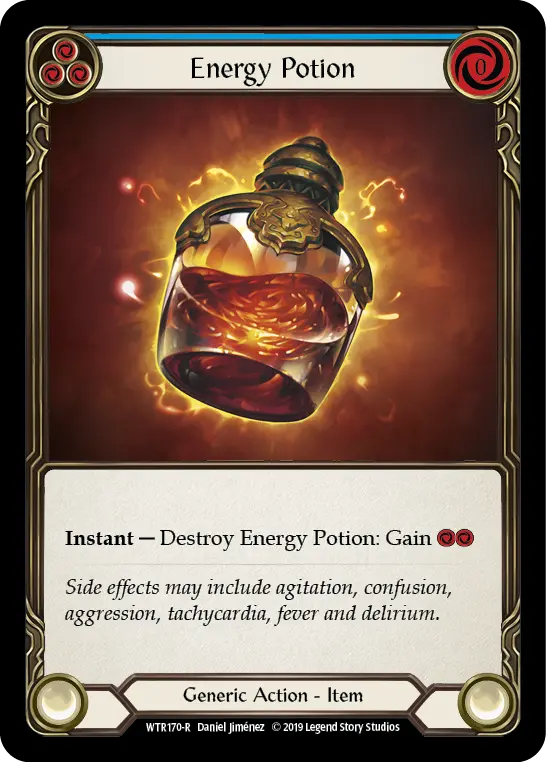
- Permanents: heroes, arena-cards and tokens in the arena. A deck-card becomes a permanent only with a permanent subtype, such as Ally, Aura, Item, Landmark or Affliction (CR 1.3.3). Example: Energy Potion is an Item, so it stays in the arena after it resolves. Sink Below has no permanent subtype and goes to the graveyard.
Last known information (LKI)
If a rule or effect needs information about an object that no longer exists, it uses a snapshot from just before the object left (CR 1.2.3).
- LKI includes counters and the effects on the object.
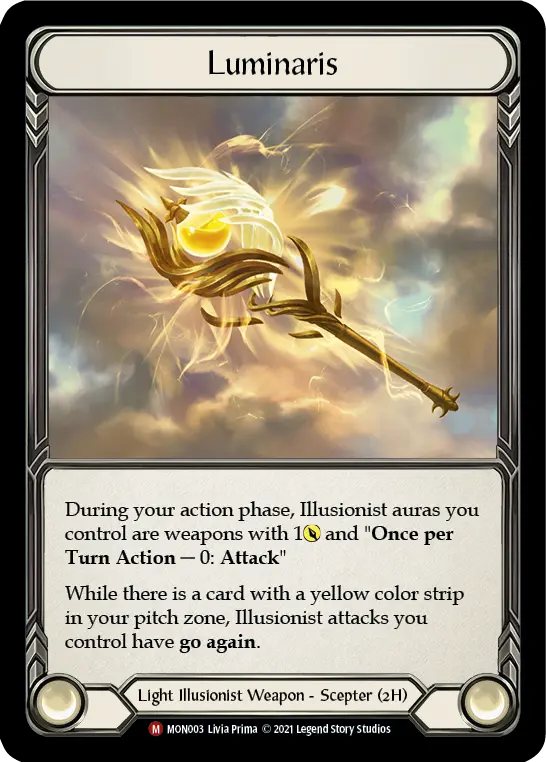
- LKI can't be changed. Example: Luminaris gives your Illusionist attacks go again while a yellow card is in your pitch zone. If an Illusionist attack has already left the chain, pitching a yellow card afterwards doesn't give its chain link go again.
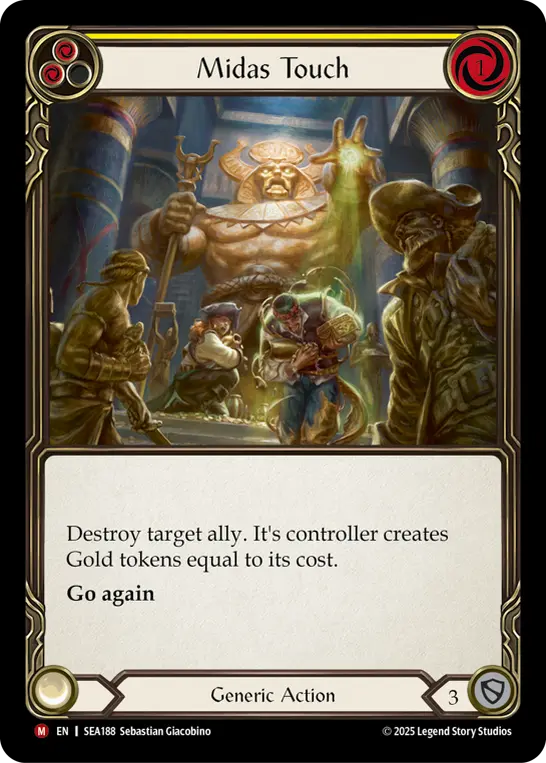
- LKI isn't an object, so it can't be targeted. Example: Midas Touch destroys an ally, then its controller creates Gold equal to its cost. The ally is gone by then, so LKI supplies both the controller and the cost.
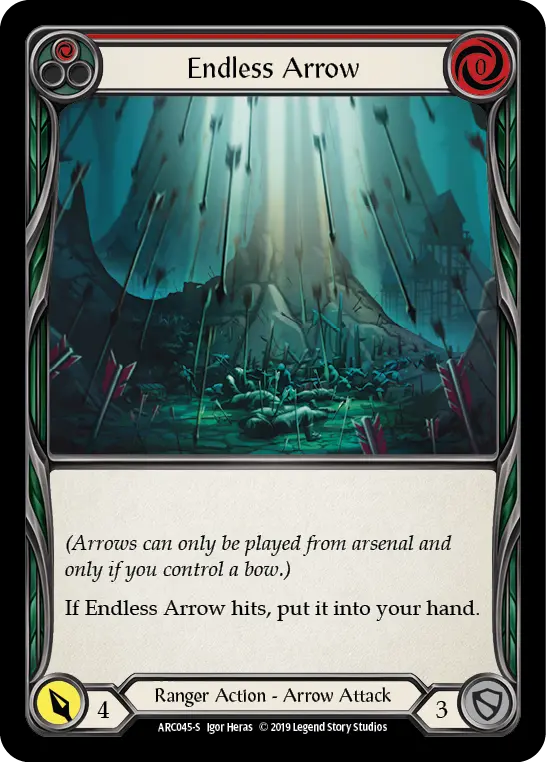
- Example: Endless Arrow hits and returns to hand. Its chain link still uses the arrow's LKI, so if it had go again, the player still gains the action point.
Priority
- Only one player has priority at a time. Players only get priority in the action phase (CR 1.11.3).
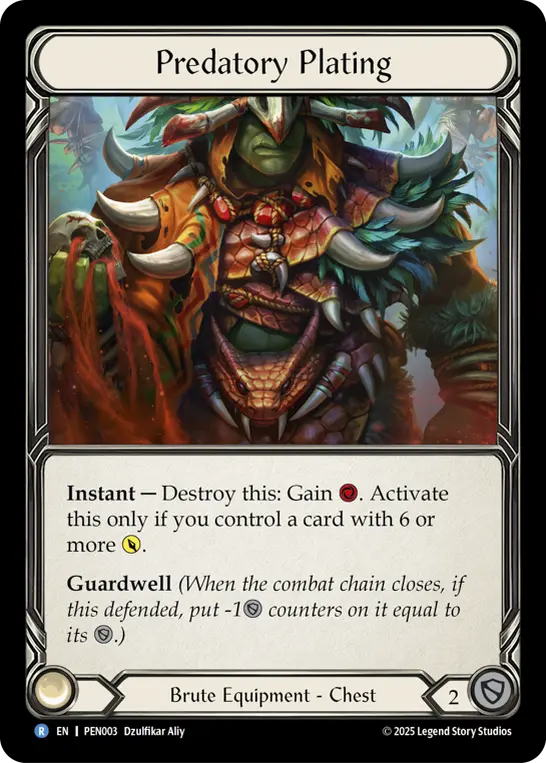
- No one has priority while a card is being played, an ability is being activated, a layer is resolving, or game state actions are happening (CR 1.11.5). This explains a lot of release-note rulings. You can't respond halfway through a card's resolution. You also can't activate an instant ability halfway through paying a cost. Example: Predatory Plating can't be activated to help pay for the 6-power card you're in the middle of playing (see Card Interactions).
- The turn-player gets priority at the start of the action phase, after each layer resolves, and at the start of most combat steps.
- If everyone passes in a row with something on the stack, the top layer resolves. With an empty stack, the step or phase ends (CR 1.11.4a).
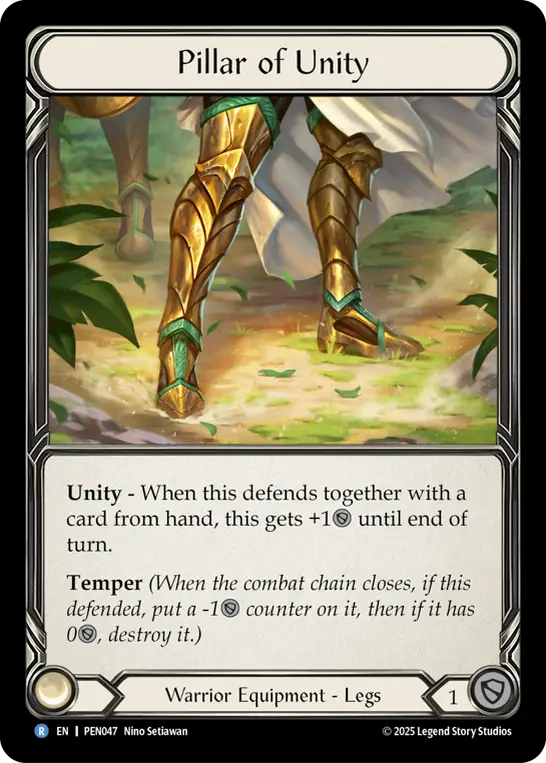
- No priority in the start phase, the end phase, or the close step of combat (CR 4.2.1, 4.4.1, 7.7.1). Example: the Temper counter on Pillar of Unity goes on in the close step, so no one can respond to it.
Turn structure
Start of game (CR 4.1)
- Heroes go face up.
- A randomly chosen player picks who goes first. In later games, the player who lost the previous game picks. After a draw, the same player picks again.
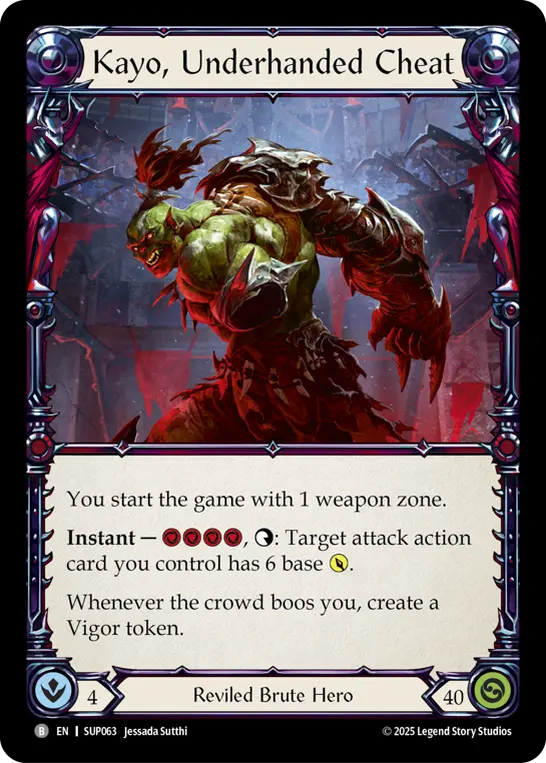
- Each player secretly picks arena-cards: up to one each for head, chest, arms, legs and weapon zones. Example: Kayo, Underhanded Cheat starts the game with only one weapon zone, and doesn't get a second one back even if Kayo loses that ability (CR 4.1.2a).
- Arena-cards are revealed, starting with the first player.
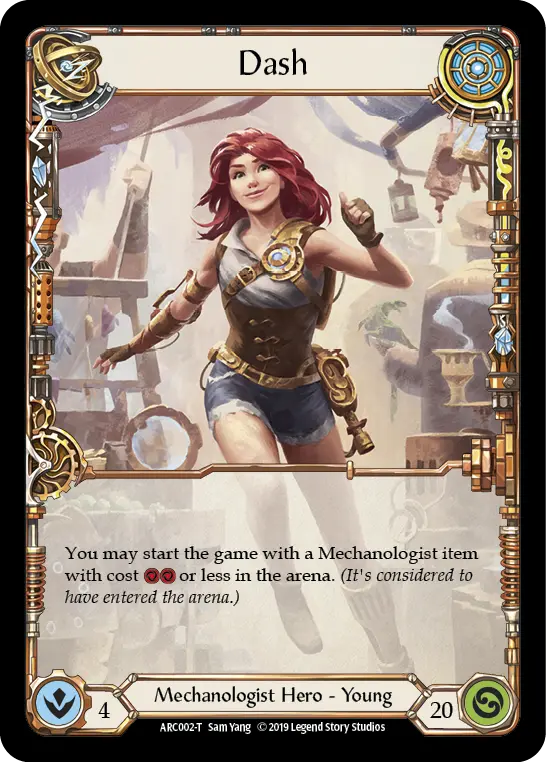
- Each player picks the deck-cards for their deck. Example: Dash may start with a cheap Mechanologist item in the arena. It's chosen from the deck, so a 40-card deck starts with 39 cards in the deck zone (CR 4.1.6b).
- Everything left over becomes the player's inventory. It's private and isn't a zone.
- Decks are shuffled and presented to an opponent to shuffle or cut.
- "Start of the game" triggers resolve.
- Everyone draws up to intellect.
Arena-cards before the deck
Arena-cards are now chosen before the deck. This started as a trial in the September 17, 2026 rules update and is now in the CR and TRP.
Start phase and action phase
- Start phase: "until start of turn" effects end, then start-of-turn triggers resolve. No priority (CR 4.2).
- Action phase: beginning-of-action-phase triggers, then the turn-player gets 1 action point and priority. Gaining that point doesn't count as "gaining an action point" for triggers or replacements (CR 4.3.2).
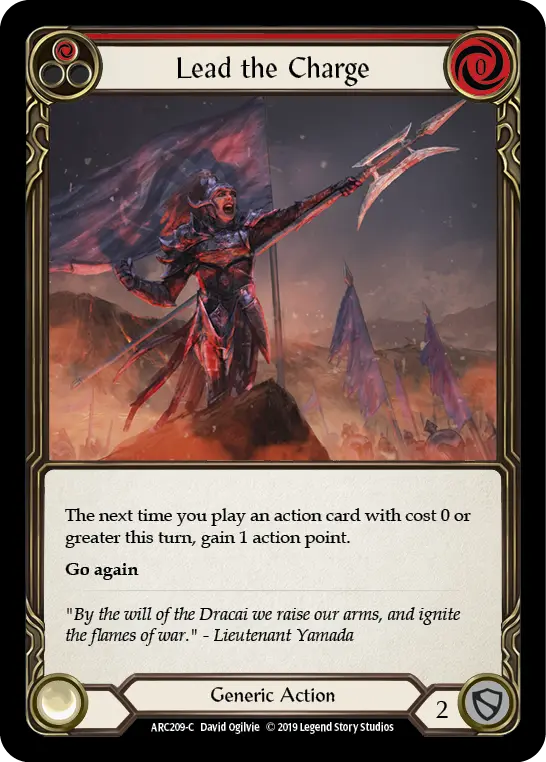
- A player can only gain action points during their own action phase. An action card played as an instant on an opponent's turn gives no action point from go again (CR 1.13.2b). Example: if you play Lead the Charge as an instant on an opponent's turn, its go again gives you nothing. Neither does its own "gain 1 action point" when you play another action card that turn.
End phase (CR 4.4)
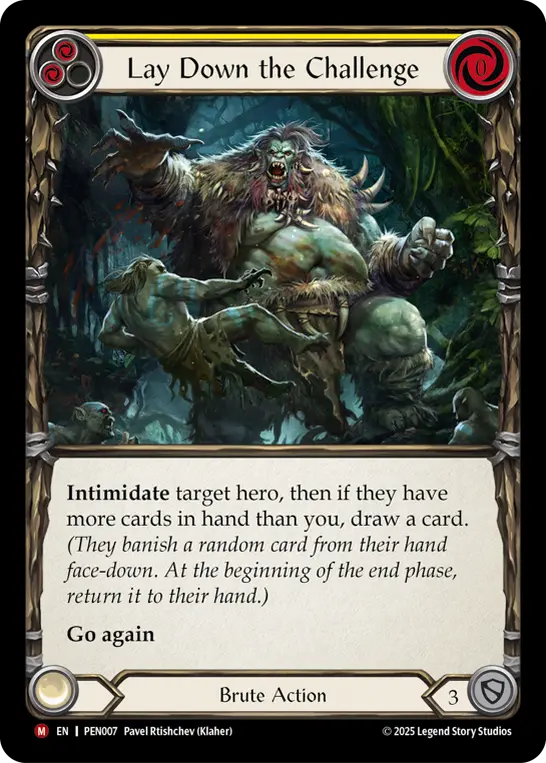
Beginning-of-end-phase triggers resolve first. Example: the card banished by Lay Down the Challenge's intimidate comes back here, before the arsenal step. Then the end-of-turn procedure runs in this order:
- Allies' life resets to base (counters still count).
- The turn-player may put a card from hand face down into an empty arsenal.
- Every player puts their pitch zone on the bottom of their deck, in any order. The order is hidden information.
- The turn-player untaps their permanents.
- Everyone loses all action points and resource points.
- The turn-player draws up to intellect. On the first turn of the game, every player draws up to intellect.
Then the turn ends. "This turn" effects end, and play passes clockwise.
Ending a game (CR 4.5)
- A player loses at 0 life, with no hero, by an effect, or by conceding.
- If every remaining hero hits 0 at the same time, the game is a draw. A stalemate (no one can advance) or a deadlock (no one will advance) is also a draw.
Costs and assets
- There are four kinds of assets: action points, resource points
 , life points
 and chi points
 (CR 1.13). Example: Energy Potion gives resource points,
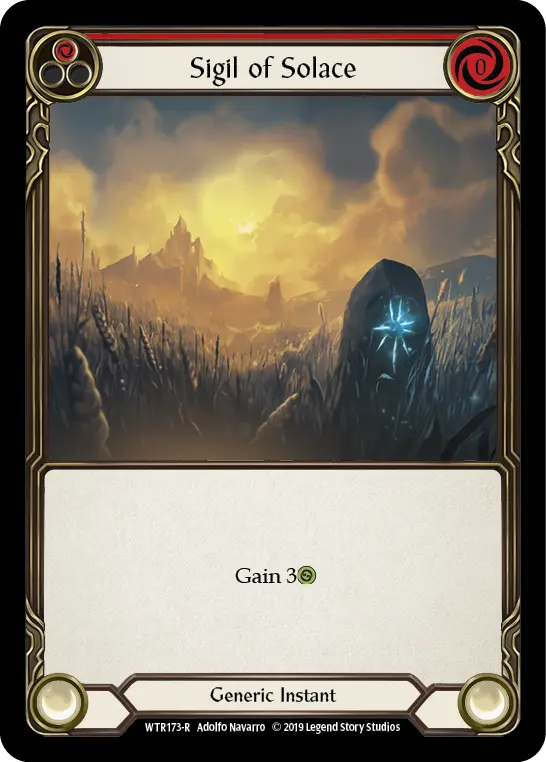
and Sigil of Solace gives life points.
- Payment order for mixed costs: chi, then resources, then life, then action points (CR 1.14.2a).
- Pitching: you pitch one card at a time, only while you still owe a cost that card would help pay, or when an effect tells you to. You can't pitch "extra" (CR 1.14.3b). Pay 3 with 1 resource floating, pitch a blue Sink Below (worth 3), and you have 1 left over and can't pitch again.
- Chi can pay resource costs, and has to be spent before resource points (CR 1.14.2d).
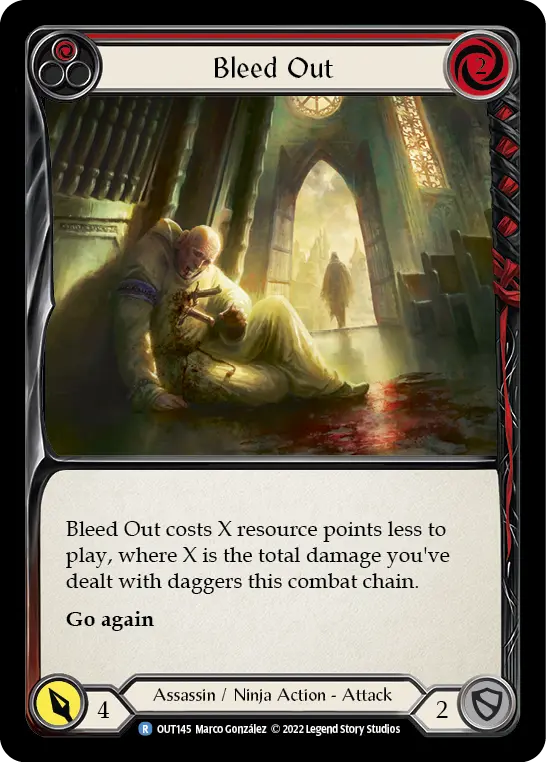
- Cost calculation for playing a card (CR 5.1.6a): start at the printed cost, apply "set" effects, then increases, then reductions. A cost can't go below 0. Increases come before reductions whatever their timestamps. Example: Bleed Out costs less for each point of dagger damage this chain. Any cost increase is applied first, then Bleed Out's reduction, and it never drops below 0.
- An action card costs 1 action point, unless it's played as an instant, in which case it costs 0 (CR 5.1.6b).
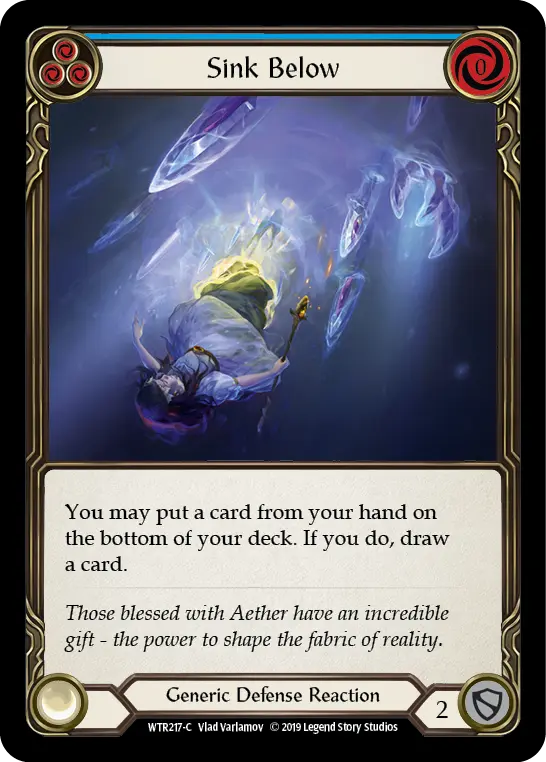
- A zero cost is still a cost. You pay it by acknowledging it (CR 1.14.5). Example: Sink Below costs 0, and playing it still goes through the payment steps.
Playing cards and activating abilities
Playing a card goes through nine steps (CR 5.1). Nobody has priority in between them.
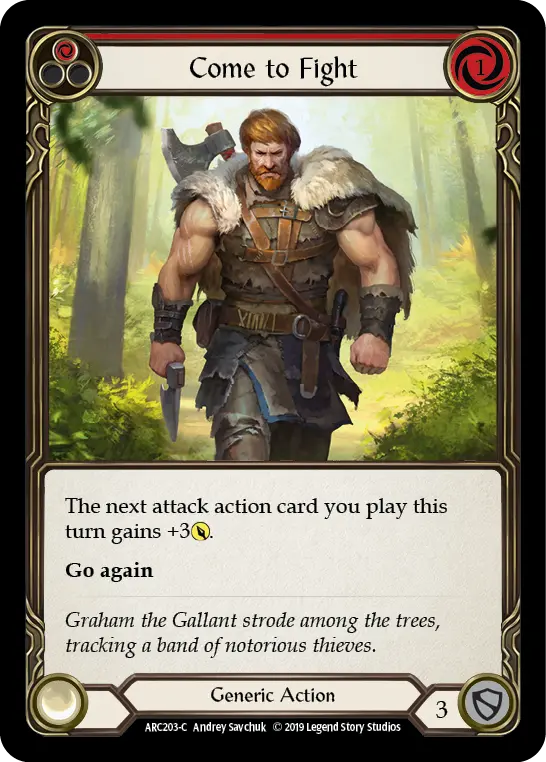
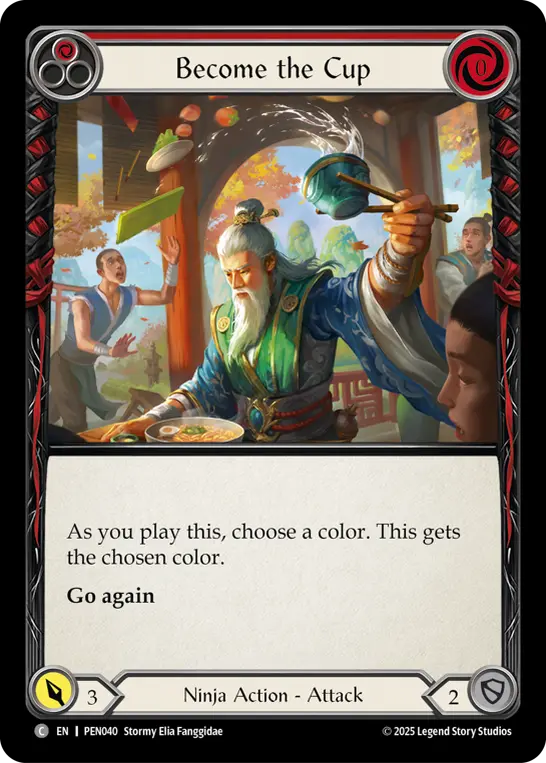
- Announce: the card moves to the stack. "Next card you play" effects that match it start to apply. Example: Come to Fight's +3 power attaches to the next attack action card as soon as it's announced. Become the Cup picks its color here too (CR 5.1.2a).
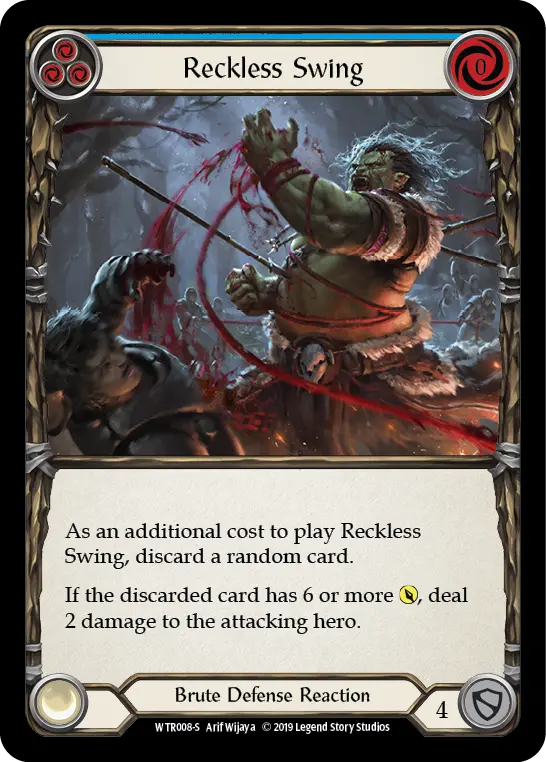
- Declare costs: X, optional extra costs, alternative costs. Example: Reckless Swing has an extra cost of discarding a random card.
- Declare modes and targets. Attacks declare their attack-target here. Example: Lunging Press picks its target attack here.
- Check legal play. If it's illegal, everything is reversed.
- Calculate asset-costs.
- Pay asset-costs (pitching happens here).
- Calculate effect-costs.
- Pay effect-costs.
-
Play: the card is played, and the player gets priority again.
-
You play cards from hand or arsenal unless an effect says otherwise (CR 5.1.1a). Example: Ghostly Visit also allows the banished zone.
- Activated abilities are written as limit, type — cost: ability, condition. Activating needs priority, a functional ability, and control of its source. Otherwise it follows the same steps as playing a card (CR 5.2). Example: Energy Potion: the type is Instant, the cost is "destroy this", and the ability is "gain 2 resources".
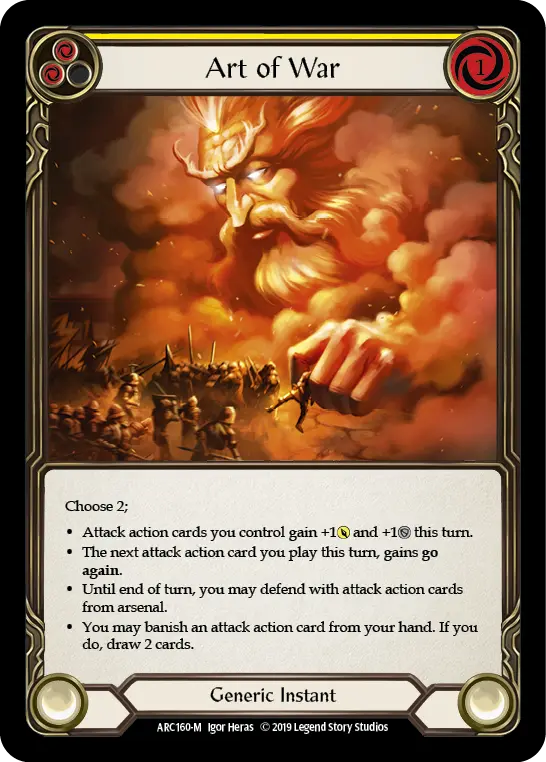
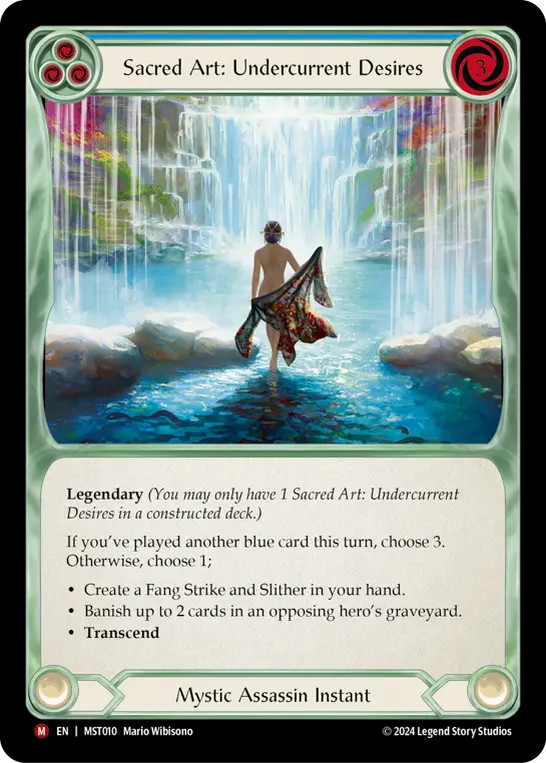
- Modes are chosen as the layer goes on the stack, and the number of modes is fixed at that point (CR 1.7.5). Example: Art of War says "choose 2", so you pick two different modes. Sacred Art: Undercurrent Desires lets you choose 3 if you've played another blue card. That's checked when you choose, and doesn't change later.
Resolving a layer (CR 5.3)
- Check: a defense reaction that can't become a defending card fails here.
- Static abilities of the layer turn on.
- Effects happen in order, except go again. If one fails, the rest still happen.
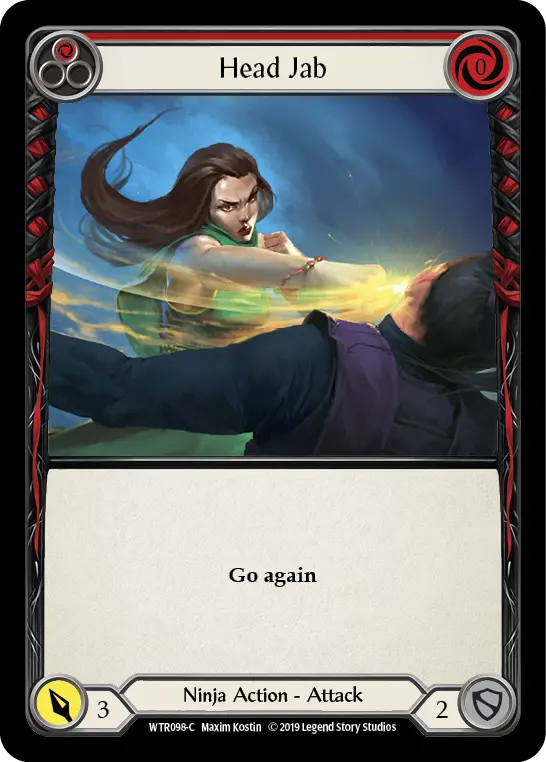
- Go again: the controller gains 1 action point, using LKI if needed. Example: Head Jab has go again, so you get the action point back when it resolves.
- Leave the stack: permanents go to the arena, and defense reactions become defending cards.
- Clear whatever is left. The turn-player gets priority.
Targets
If every target of a targeted effect is gone or illegal, that effect fails. The layer still resolves and does everything else (CR 1.8.9, 5.3.4b; January 30, 2026 rules update). An attack with no legal target left when it would hit the chain is the exception: it's removed from the queue (CR 7.2.2c).
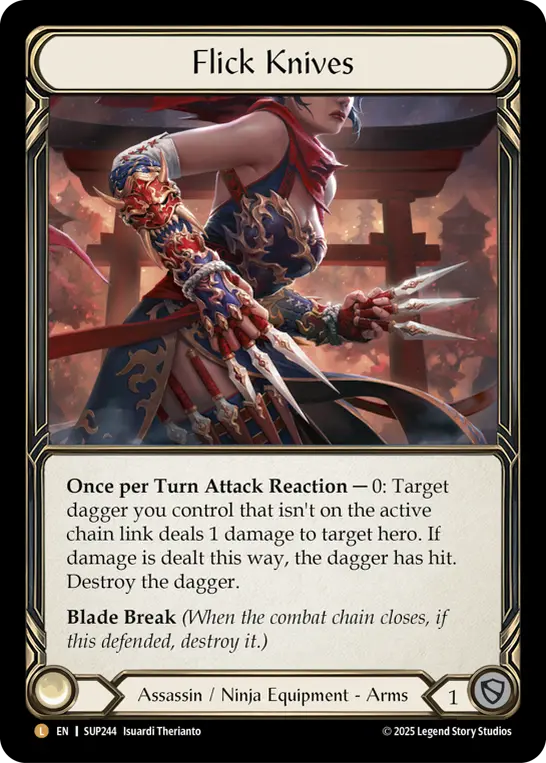
Example: Flick Knives targets a dagger and a hero. If the dagger is gone before it resolves, the damage effect fails and no damage is dealt.
Effects
Optional, conditional and targeted
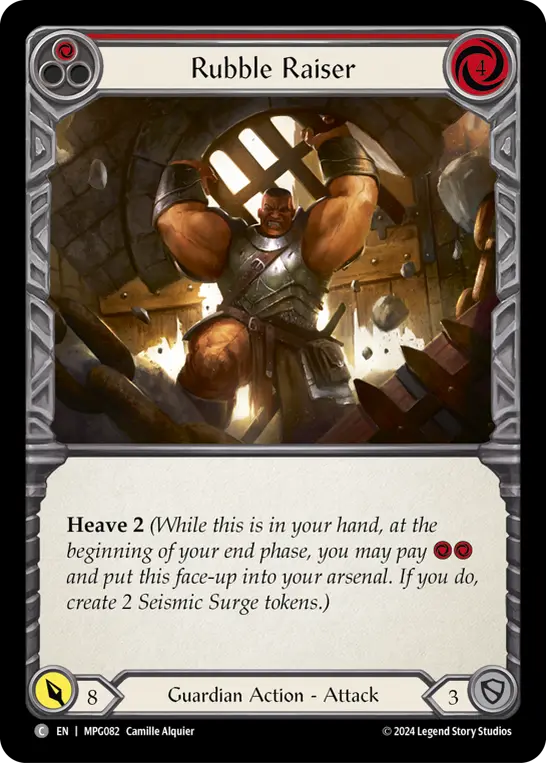
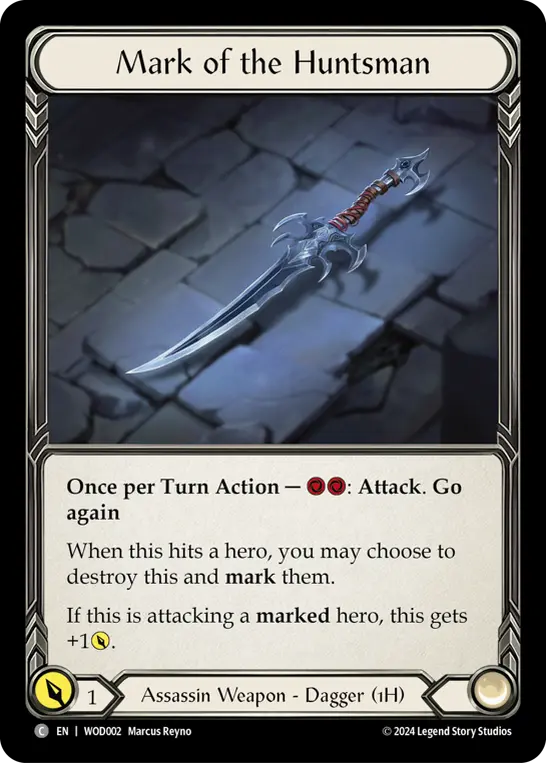
- Optional ("may"): you can't choose an optional effect you can't actually carry out, including one with a cost you can't pay. Heave needs both the resources and an open arsenal. "May choose to" is different: you can choose it anyway (CR 1.8.3b). Example: Rubble Raiser has Heave 2: with less than 2 resources or a full arsenal, you can't heave it. Mark of the Huntsman says "you may choose to destroy this and mark them", so you can choose it even if one part can't happen.
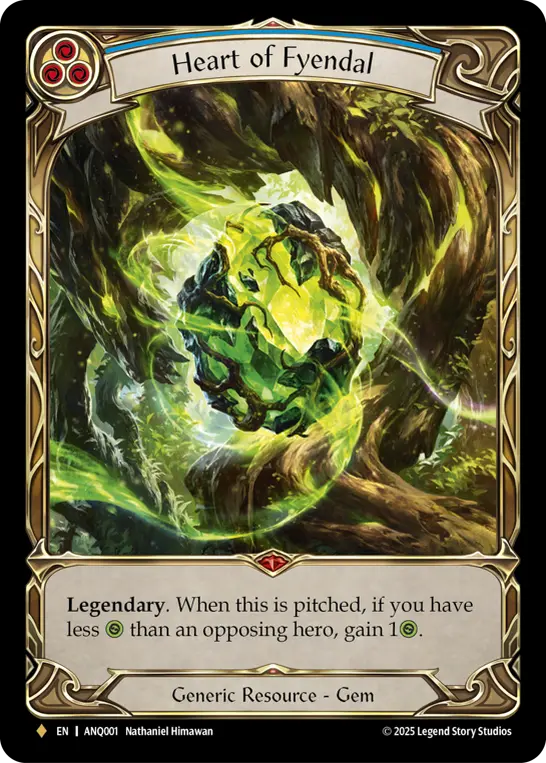
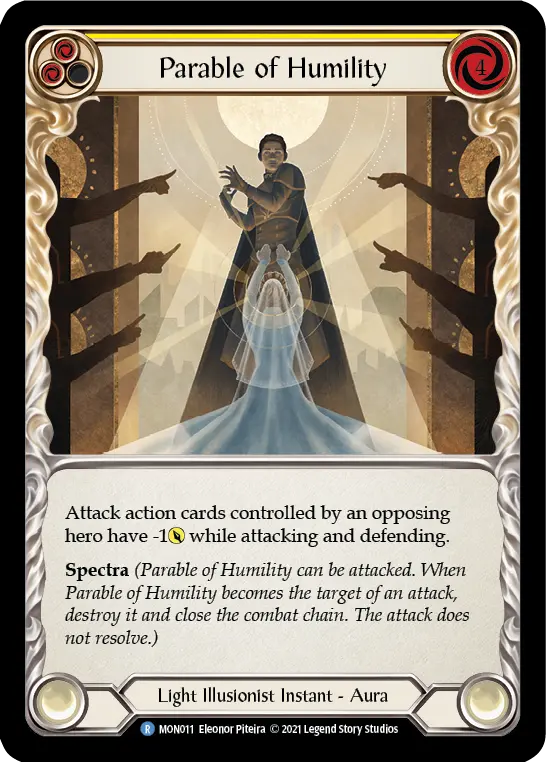
- Conditional ("if"): for a discrete effect, the condition is checked once, when it would happen (CR 6.1.3). "While" conditions are checked all the time (CR 1.8.4c). Example: Heart of Fyendal checks your life against your opponent's once, when it's pitched. Parable of Humility's -1 power applies only while those attacks are attacking or defending.
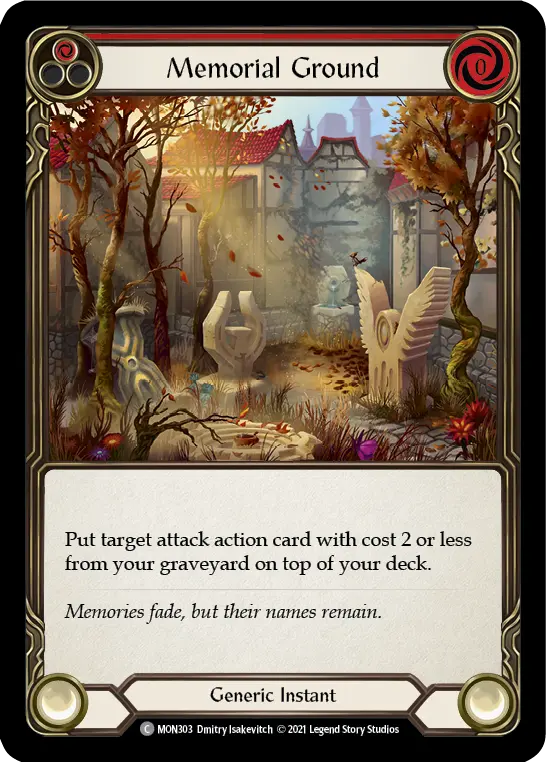
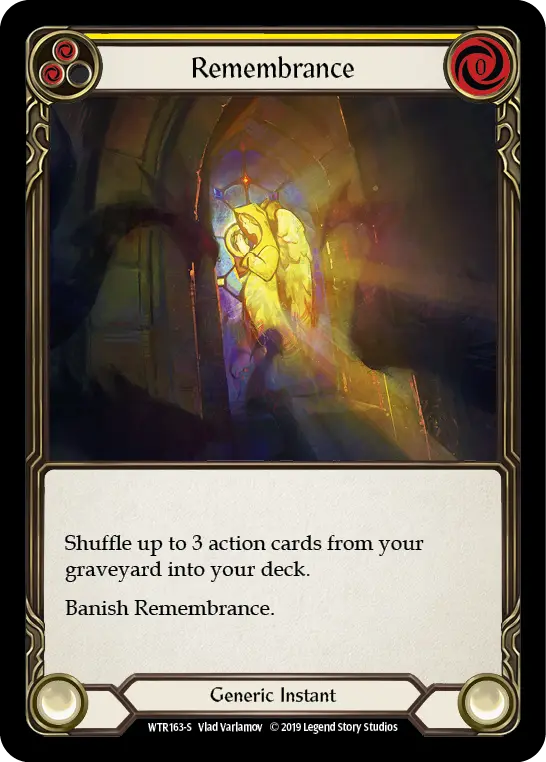
- Targeted effects use the word "target". Only public objects in the arena or on the stack can be targeted, unless the effect names another zone (CR 1.8.5). Effects without the word "target" pick their objects on resolution. Example: Memorial Ground targets a card in your graveyard because it names that zone. Remembrance doesn't say "target", so it picks its cards as it resolves.
- An effect fails if all its targets are gone, if there are no legal parameters, or if every event it creates fails (CR 1.8.9). Example: Flick Knives with its targeted dagger gone.
Events
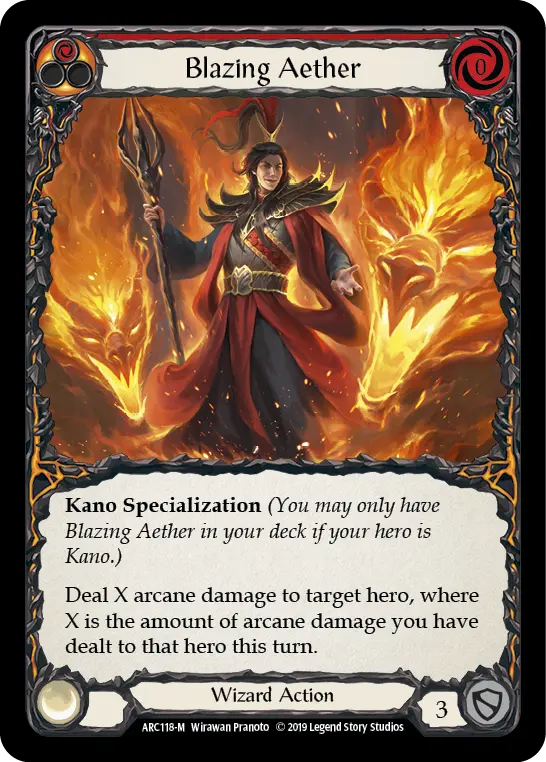
- Doing nothing isn't an event. Dealing 0 damage doesn't happen, so it can't be replaced or trigger anything (CR 1.9.1b). Example: Blazing Aether deals X arcane damage, where X is the arcane damage you've already dealt that hero this turn. With X = 0, there's no damage event at all.
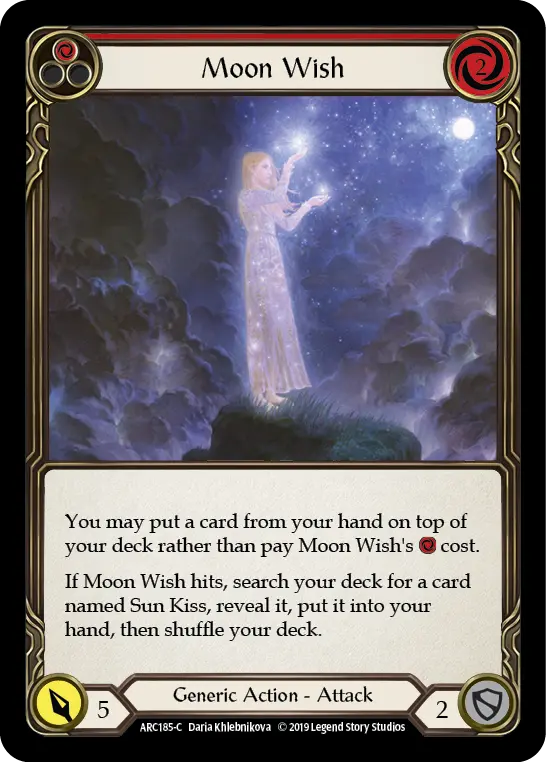
- Searching a private zone: you may "fail to find" a card the opponent can't verify (CR 1.9.1c). Example: when Moon Wish hits, you can search for Sun Kiss and choose not to find it.
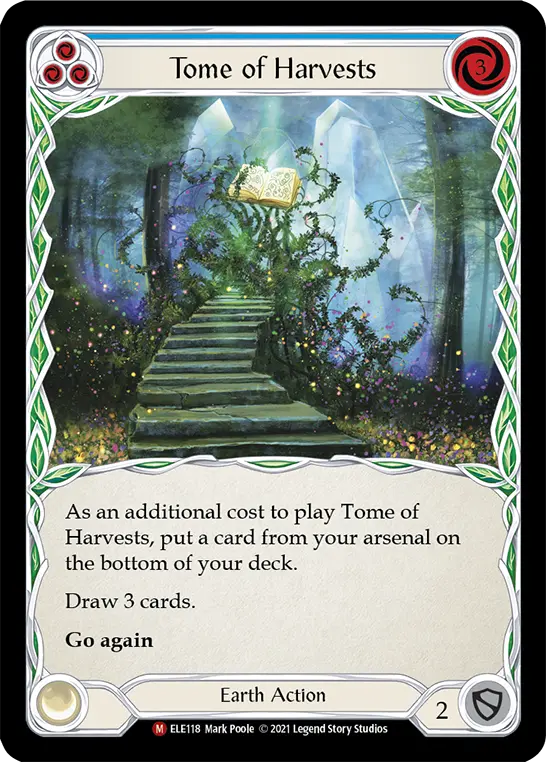
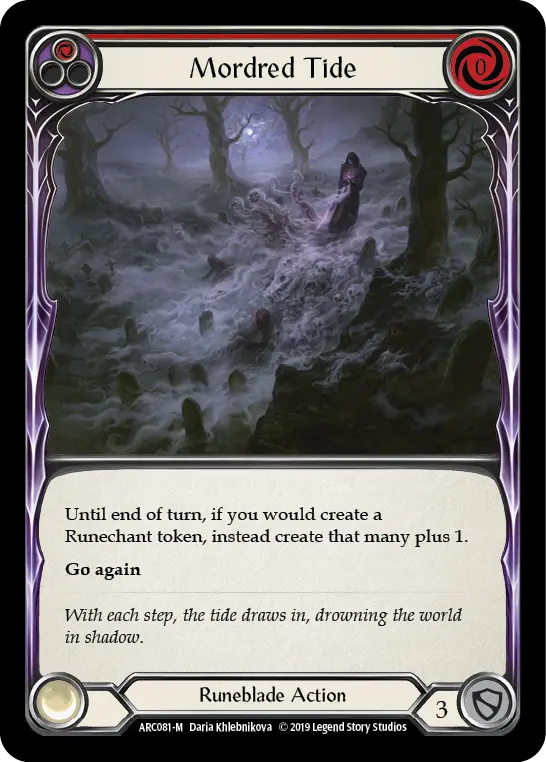
- Multi-events ("draw 3") trigger an effect once, not once per card. They're also replaced as a whole (CR 1.9.2). Example: Tome of Harvests draws 3 as one multi-event. Mordred Tide replaces a whole group of Runechants with that many plus 1, not plus 1 for each.
Continuous effects (CR 6.2–6.3)
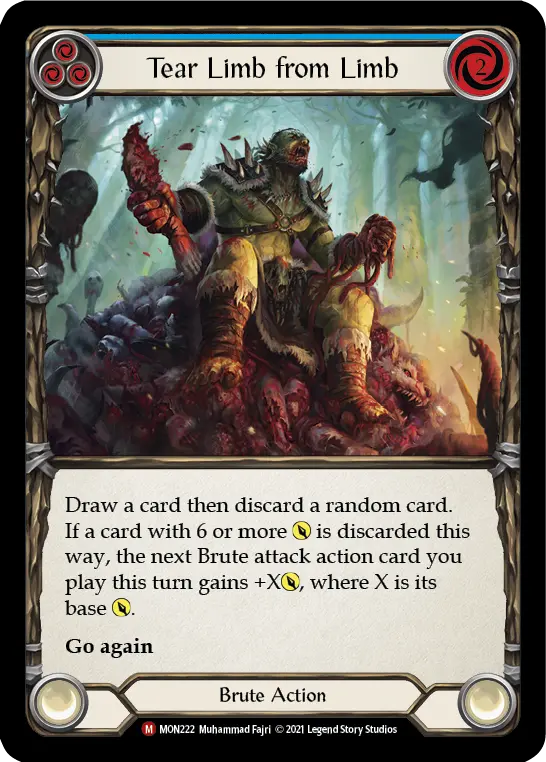
- From a resolved layer: with no stated duration, it lasts until end of turn. Values like X are locked in when it's created. It keeps applying to an object even if the object's properties change. Example: Come to Fight's bonus lasts until end of turn. Tear Limb from Limb is the twist: its X is the next Brute attack's base power, so X is locked in when that attack is played, not when Tear Limb resolves (CR 6.2.2b).
- From a static ability: it lasts while the ability works, values update live, and it applies only while the object still matches. Example: Luminaris's go again turns on and off as yellow cards enter and leave your pitch zone.
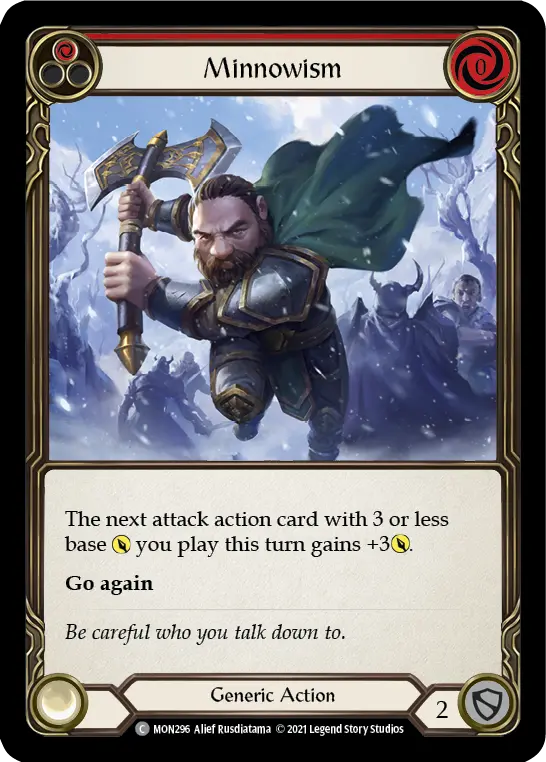
- Order of application: rules-changing effects come first, then 8 stages (copy → controller → name/text → types → supertypes → abilities → base numbers → numbers). Inside the number stages, the substages are add/remove property → set → multiply → divide → add → subtract → dependent. Ties go by timestamp. Example: Hypothermia changes the rules ("can't gain go again"), so it applies before any effect that would add go again. Minnowism checks base power: if an earlier stage drops a 6-power attack's base to 3, Minnowism then applies to it (CR 6.3.5a).
Set before add
An attack with base 3 power gets +2. Later, another effect sets its power to 1. "Set" goes before "add" whatever the timestamps, so the result is 1 + 2 = 3.
Replacement effects (CR 6.4–6.5)
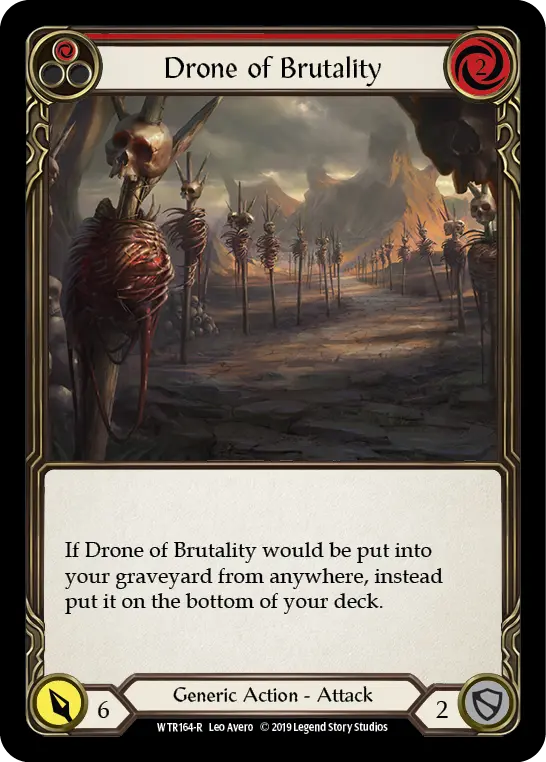
- A replacement has to exist before the event happens. They're never retroactive. Example: Drone of Brutality goes to the bottom of your deck instead of the graveyard, because its replacement is there before it would move.
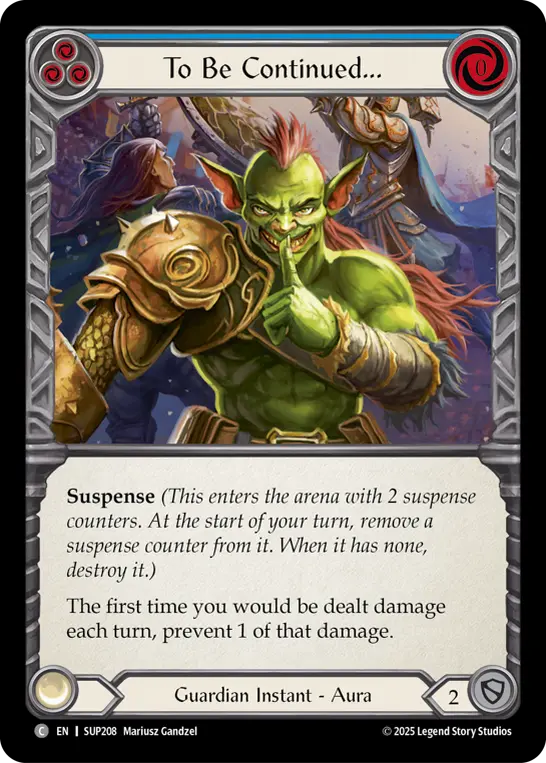
- Each replacement modifies an event once. Example: with two To Be Continued... in play, 1 damage is prevented by the first one only. The second one is used on the next damage that turn (CR 6.4.2b).
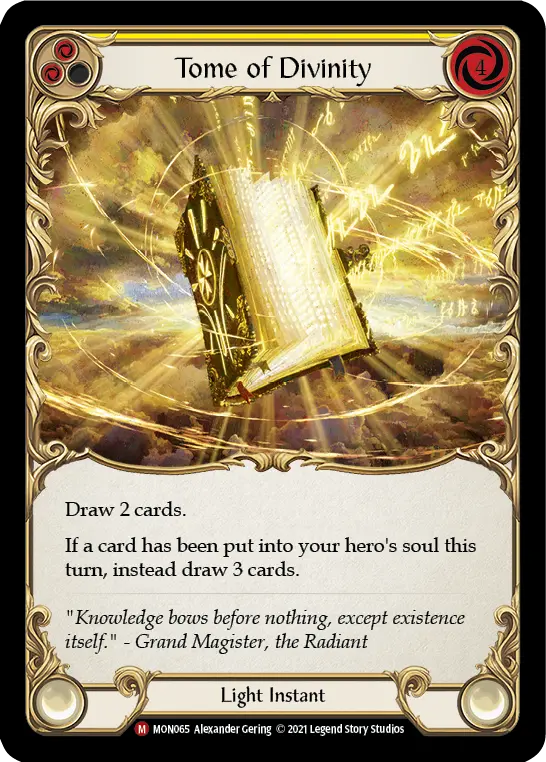
- When several apply, the turn-player picks who goes first. Then they apply in this order: self/identity → standard → prevention → event happens → outcome. Example: Tome of Divinity draws 3 instead of 2 if a card went into your soul this turn. That's a self-replacement, so it applies first.
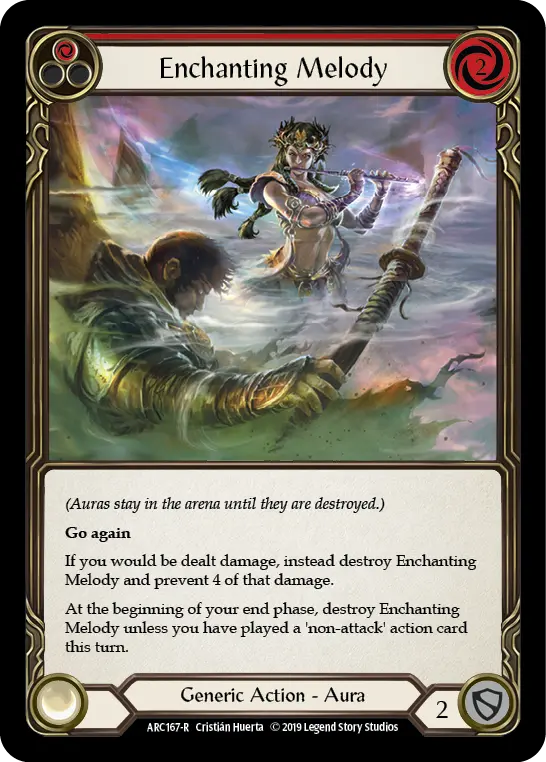
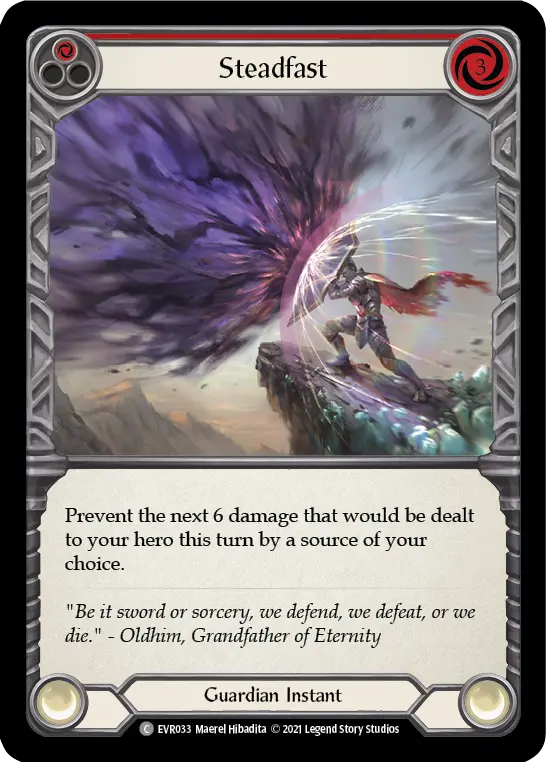
- Prevention: fixed prevention is used up on one event. Shielding ("prevent the next N") carries over until it's used up. Example: Enchanting Melody is fixed: destroy it to prevent 4 of one damage event. Steadfast is shielding: it prevents the next 6 damage from one source, spread over as many events as it takes.
Triggered effects (CR 6.6)
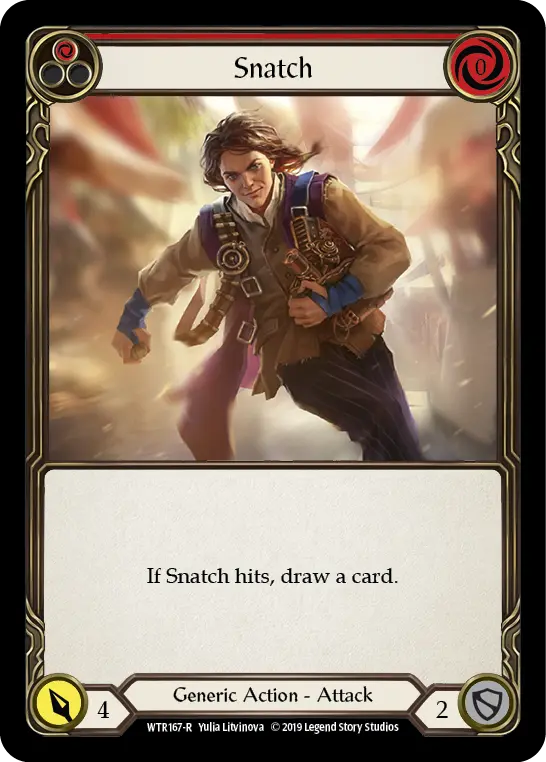
- A trigger has to exist when its event happens. Example: Snatch's "when this hits, draw a card" works because Snatch is on the chain when it hits.
- Inline triggers ("when you do") are the exception: they trigger as long as the condition was met.
- Triggered layers go on the stack before anyone next gets priority. If several are waiting, the turn-player chooses a player to start, then each player in clockwise order adds theirs in any order.
- A trigger with targets and no legal target never reaches the stack.
- A triggered or activated layer still resolves after its source is gone (CR 1.7.1a). Example: Energy Potion is destroyed to activate it, and you still gain the resources.
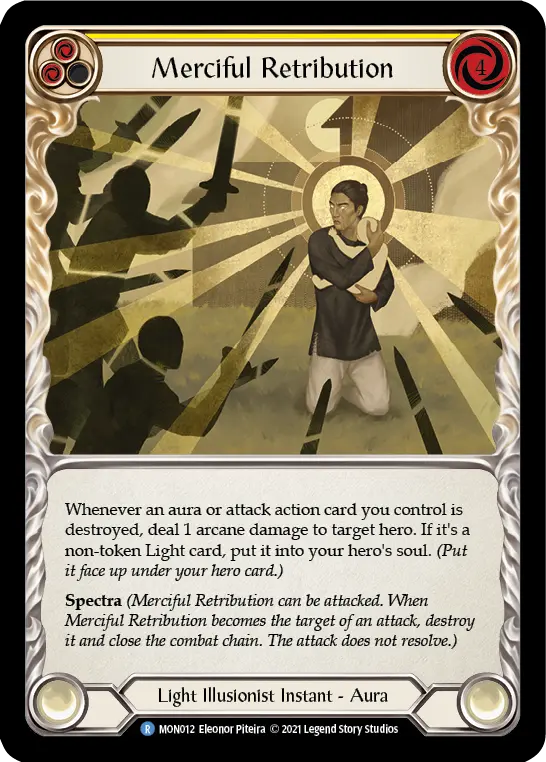
- A triggered-static ability still triggers when its source is destroyed by the same event (CR 5.4.6a). Example: Merciful Retribution triggers when an aura you control is destroyed, including itself.
Combat (CR 7)
The combat chain opens when an attack or attack-layer goes on the stack. Each attack becomes a chain link. The steps are:
| Step | What happens | Priority? |
|---|---|---|
| Layer | The attack is on the stack. When everyone passes, it goes to the attack queue | Yes |
| Attack | The next attack in the queue becomes a chain link. "When this attacks" triggers. Attacking and defending heroes are set | Yes |
| Defend | The defending hero declares defenders from hand and equipment, all at once. This isn't playing them | Yes |
| Reaction | The attacker plays attack reactions. The defender plays defense reactions | Yes |
| Damage | If power  is greater than total defense  , the attack hits for the difference |
Yes |
| Resolution | Go again gives its action point. The turn-player may attack again | Yes |
| Close | Chain-close triggers, then permanents go home and everything else is cleared | No |
Card examples for the steps:
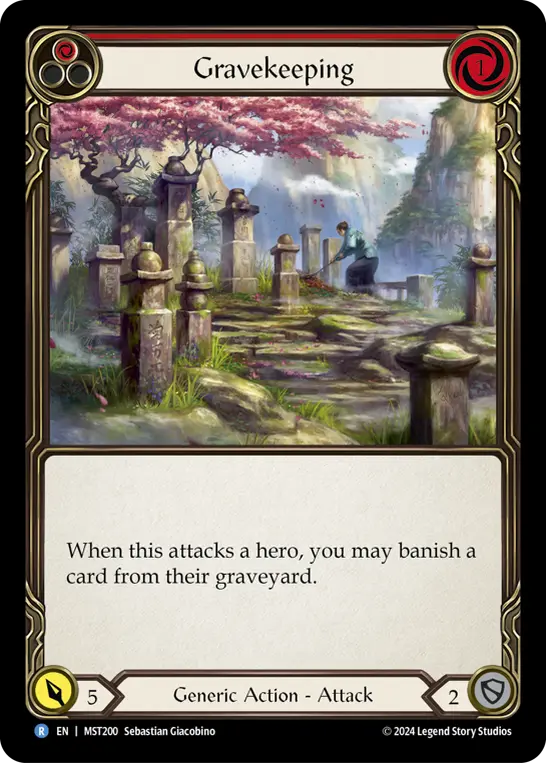
- Attack: Gravekeeping's "when this attacks a hero" triggers here.
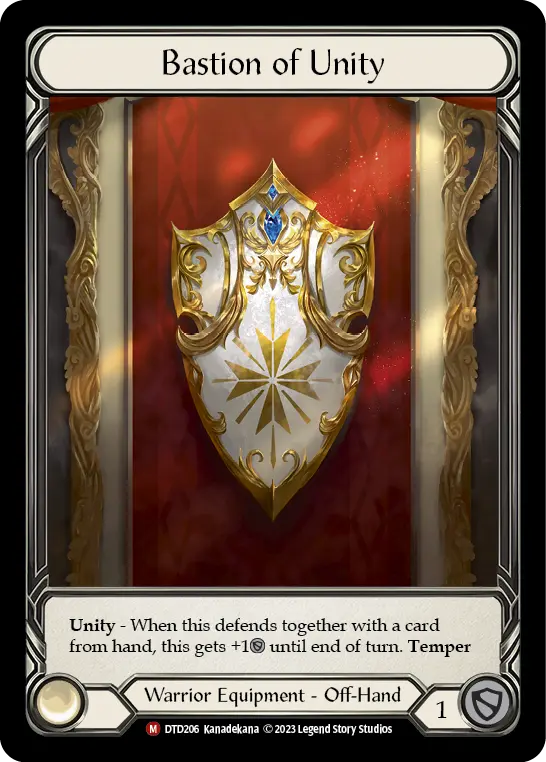
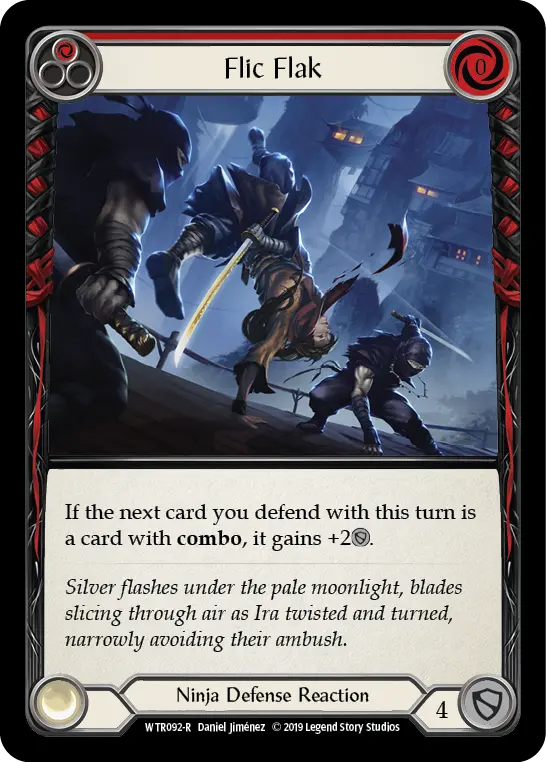
- Defend: Bastion of Unity gets its Unity bonus because every declared defender joins as one event. The defender picks the order, which matters for Flic Flak (CR 7.3.2c–d).
- Reaction: Lunging Press is an attack reaction. Sink Below is a defense reaction.
-
Close: Pillar of Unity takes its Temper counter here.
-
While the chain is open, action cards and abilities can only be used as instants. The exception is new attacks during the resolution step (CR 7.0.1a).
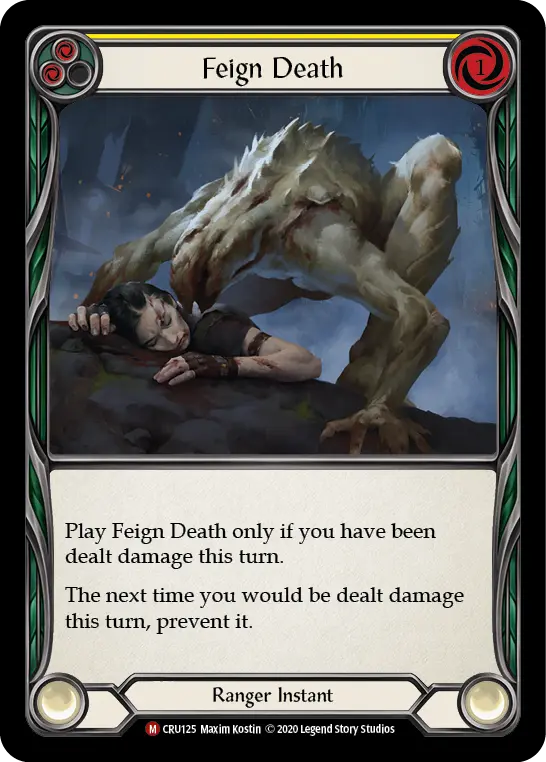
- A hit is damage from the hit-event. If prevention brings that damage to 0, it isn't a hit, and life loss is never a hit (CR 7.5.5). Example: if Feign Death prevents all of an attack's damage, the attack didn't hit, so its "when this hits" effects don't trigger.
- Attacking an ally: its controller is the defending hero, but can only declare defenders or play defense reactions if an effect allows it. Those are only allowed when a hero is the attack-target (CR 7.3.2a, 7.4.2b).
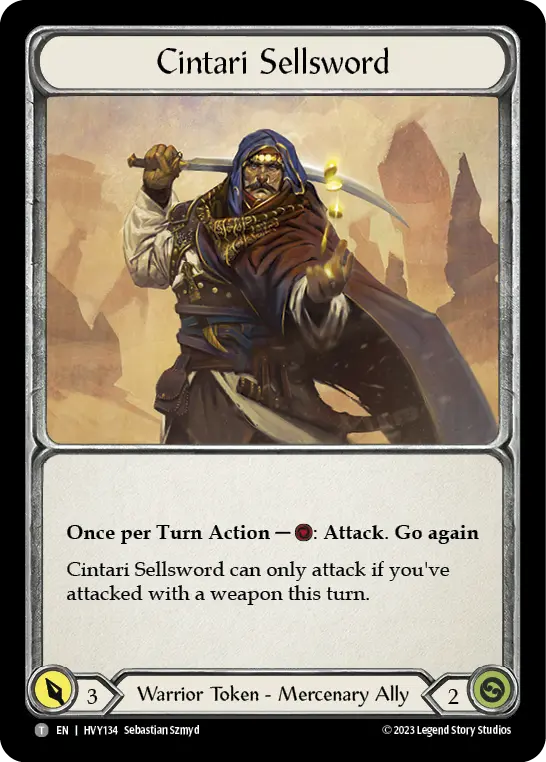
- An ally attacking: its controller is the attacking hero (CR 7.2.3a). This was clarified in the January 30, 2026 rules update. Example: Cintari Sellsword attacks through its own attack ability, and its controller is the attacking hero.
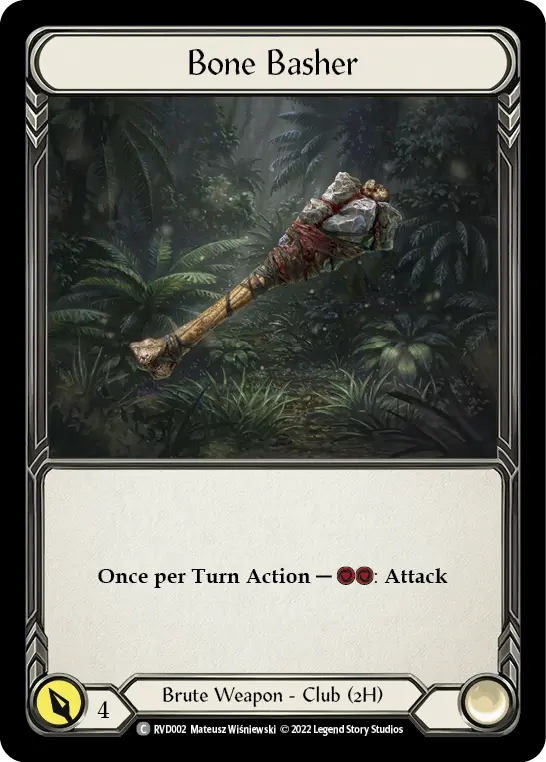
- Weapons and other attack-proxies: the proxy inherits its source's properties and any changes made to the source. Effects aimed only at the proxy end when that attack is over (CR 1.4.3). Example: Bone Basher attacks through a proxy. If Ironsong Determination gives the weapon +1 power and dominate, every attack it makes this turn has them.
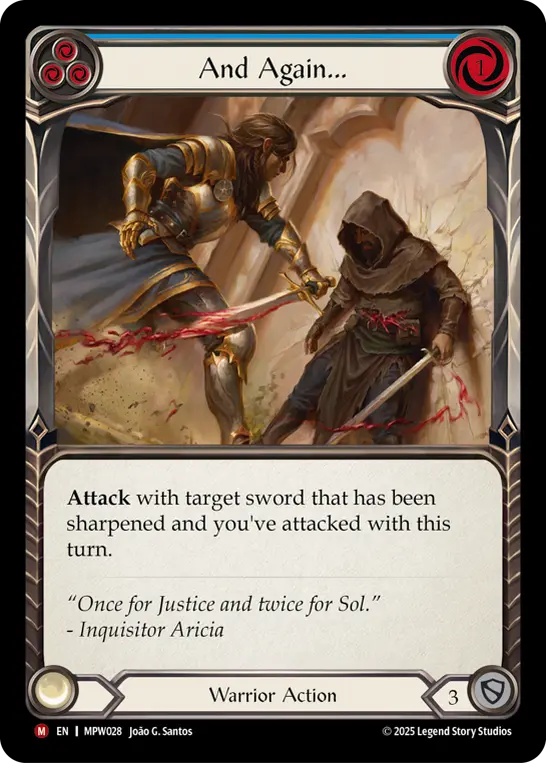
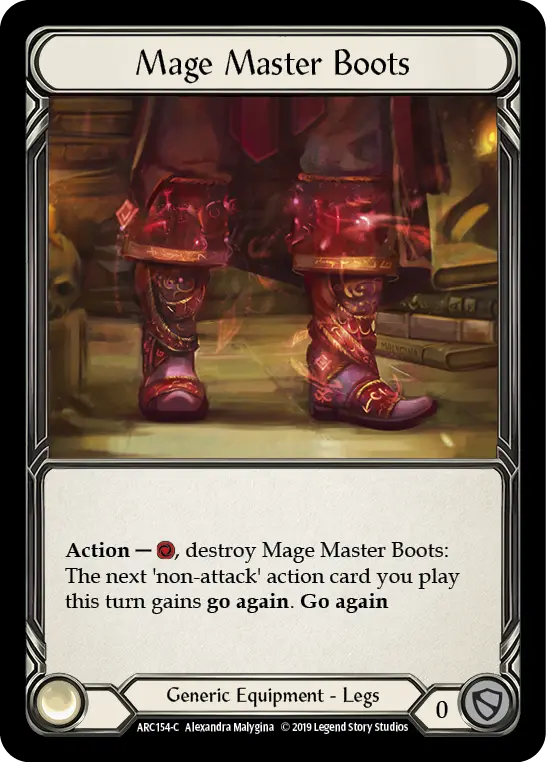
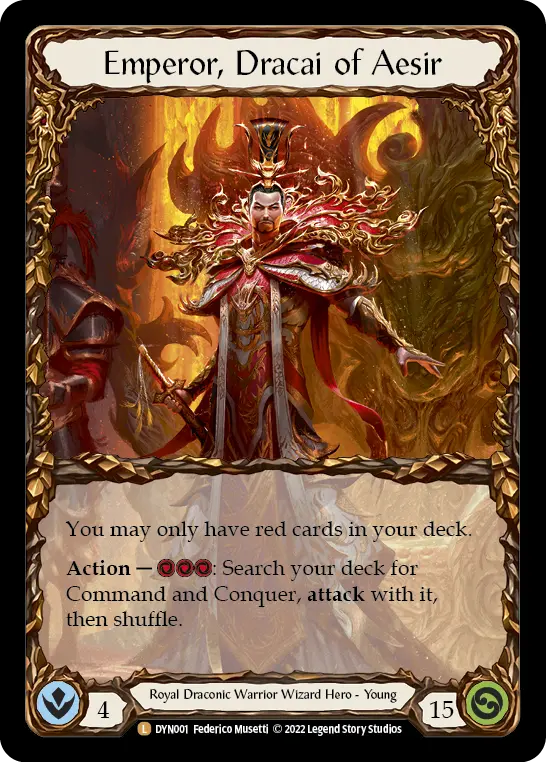
- Attack-layers: "attack with" cards like And Again… create a layer that isn't an attack. Effects on the layer don't carry over to the attack it makes (CR 1.4.4; May 19, 2026 rules update). Example: if Mage Master Boots gives And Again… go again, the sword attack it makes doesn't have go again. Emperor, Dracai of Aesir's ability works the same way with Command and Conquer.
Keywords to know
| Keyword | Meaning | CR | Example |
|---|---|---|---|
| Go again | Gain 1 action point when this resolves (or at the resolution step, for an attack). An object can't have go again twice | 8.3.5 | Head Jab |
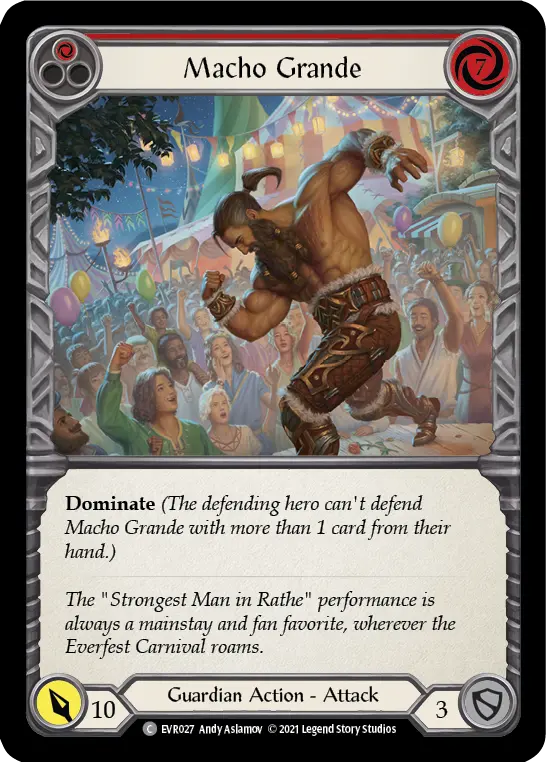
| Dominate | Can't be defended by more than 1 card from hand. Equipment and an arsenal defense reaction can still be added | 8.3.4 | Macho Grande |
| Overpower | Can't be defended by more than 1 action card | 8.3.22 | Over the Top |
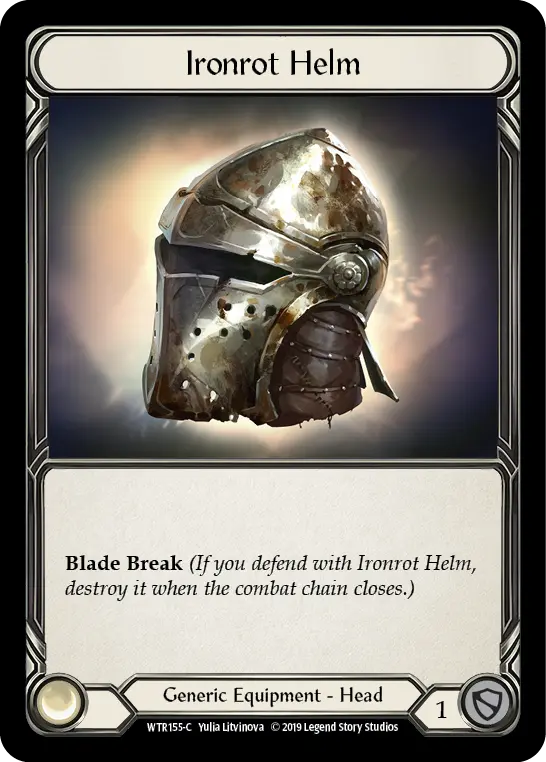
| Blade Break | When the chain closes, if this defended, destroy it | 8.3.3 | Ironrot Helm |
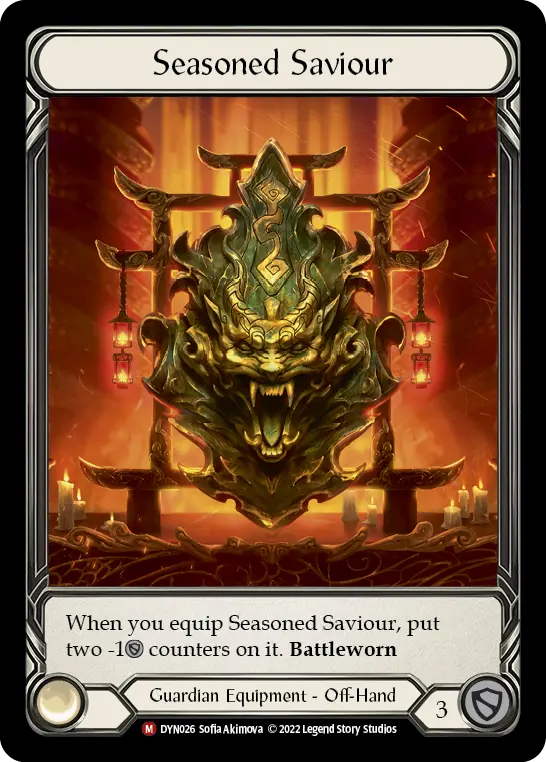
| Battleworn | When the chain closes, if this defended, -1 defense counter | 8.3.2 | Seasoned Saviour |
| Temper | Like battleworn, then destroy it at 0 defense | 8.3.10 | Pillar of Unity |
| Guardwell | When the chain closes, if this defended, -1 defense counters equal to its defense | 8.3.34 | Predatory Plating |
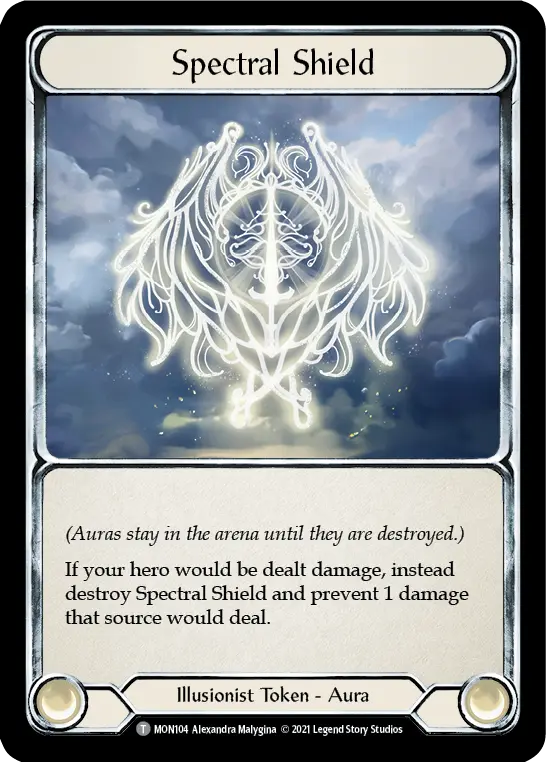
| Ward N | If you'd be dealt damage, destroy this to prevent N | 8.3.20 | Spectral Shield |
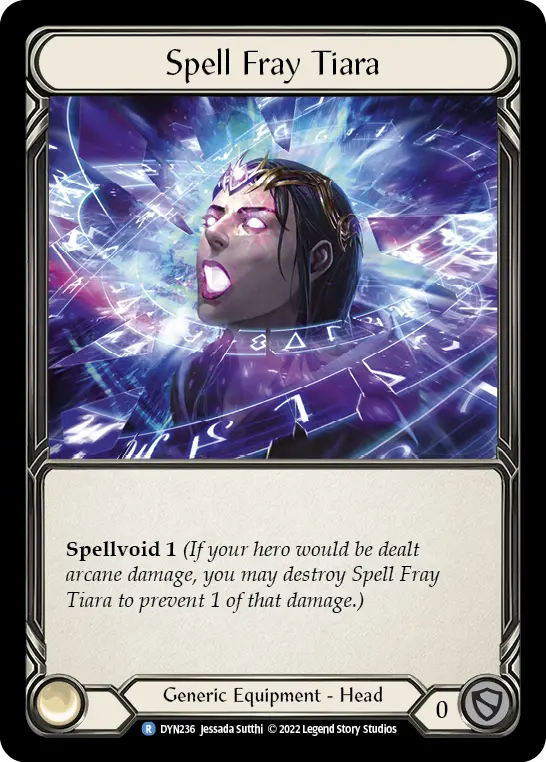
| Spellvoid N | If you'd be dealt arcane damage, you may destroy this to prevent N. If it can't be destroyed, you can't use it | 8.3.15 | Spell Fray Tiara |
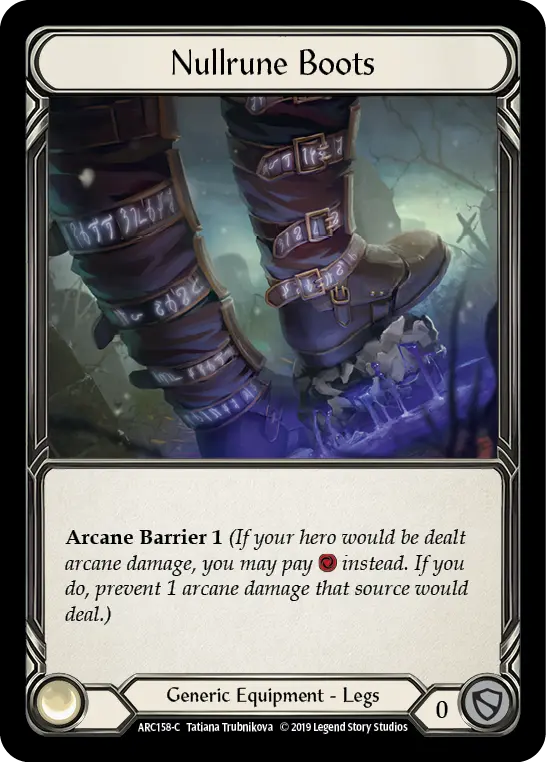
| Arcane Barrier N | If you'd be dealt arcane damage, you may pay N resources to prevent N | 8.3.8 | Nullrune Boots |
| Legendary | Only 1 copy in a constructed deck | 8.3.6 | Heart of Fyendal |
| Specialization | Only allowed if your hero is the named hero | 8.3.7 | Blazing Aether |
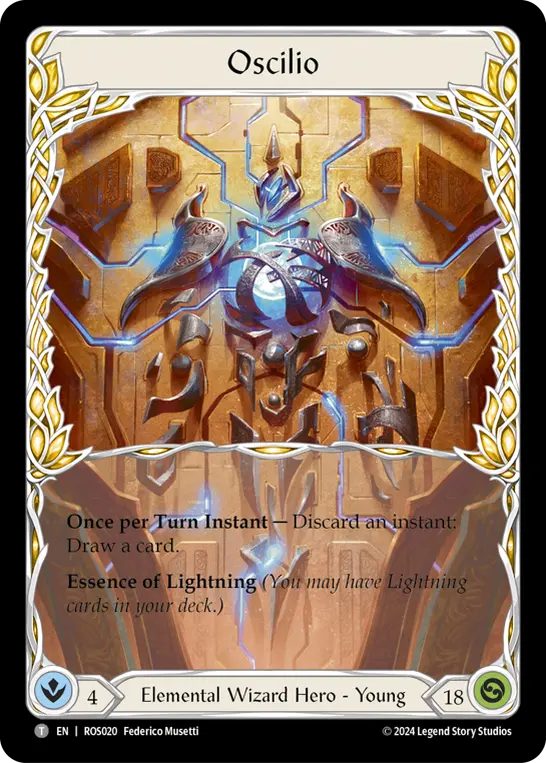
| Essence | Lets the deck include the listed supertypes | 8.3.16 | Oscilio |
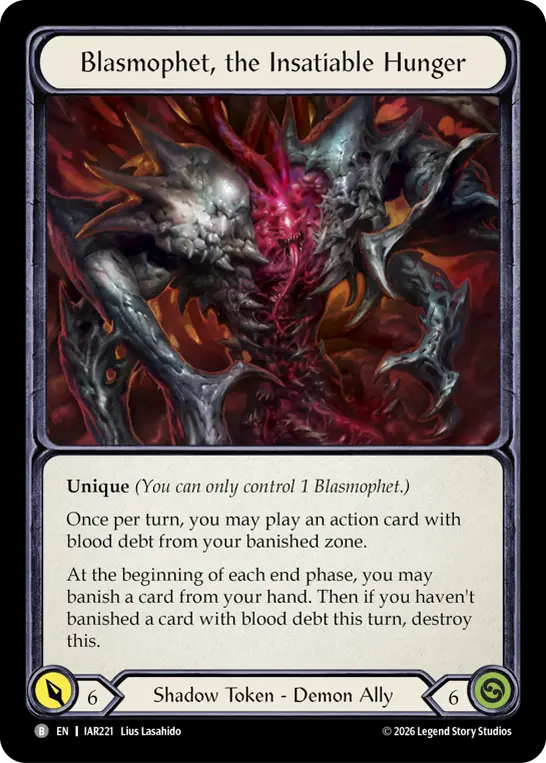
| Unique | Two or more permanents with the same name and one has unique: clear down to one (game state action) | 8.3.48 | Blasmophet, the Insatiable Hunger |
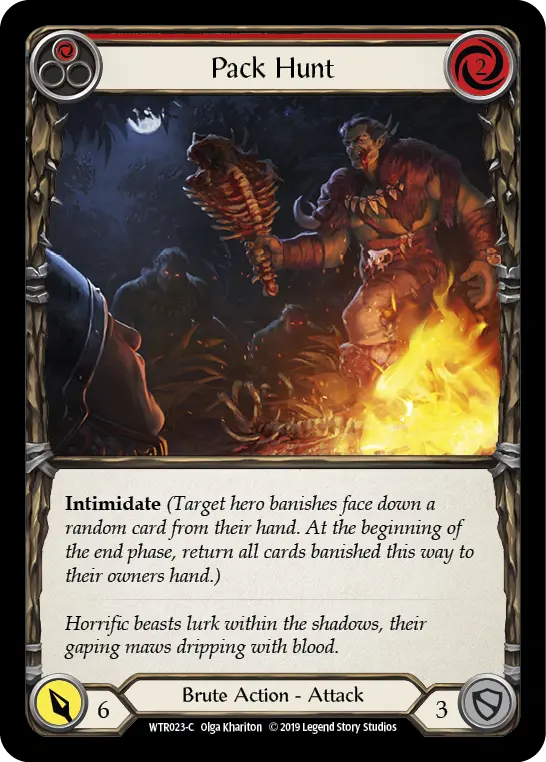
| Intimidate | Banish a random card from hand face down, and return it at the beginning of the end phase. It counts even with an empty hand | 8.5.10 | Pack Hunt |
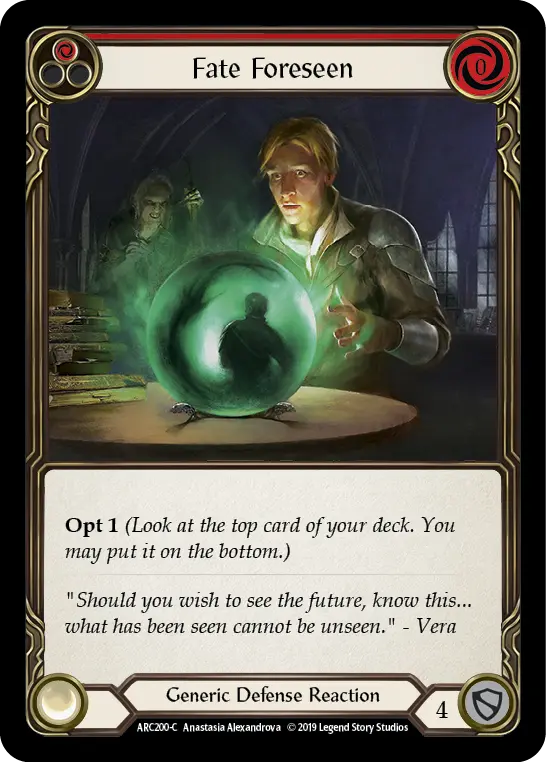
| Opt N | Look at the top N cards and put them on the top or bottom in any order | 8.5.22 | Fate Foreseen |
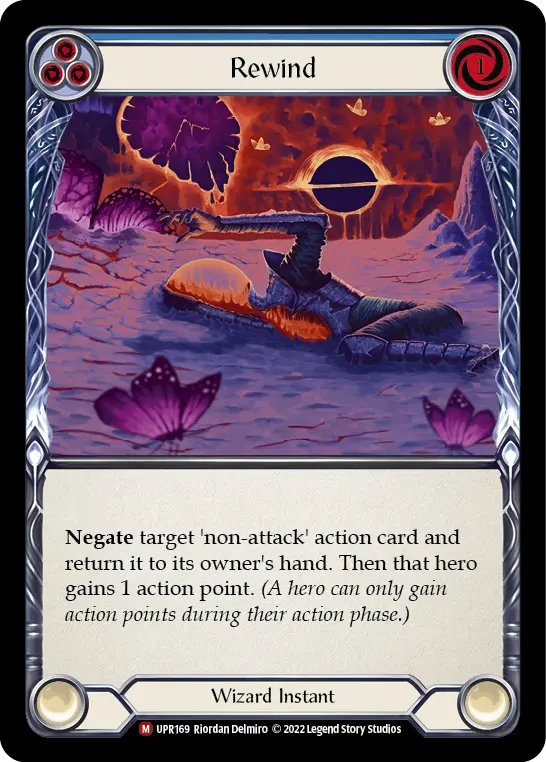
| Negate | Clear a layer from the stack. Only layers can be targeted | 8.5.26 | Rewind |
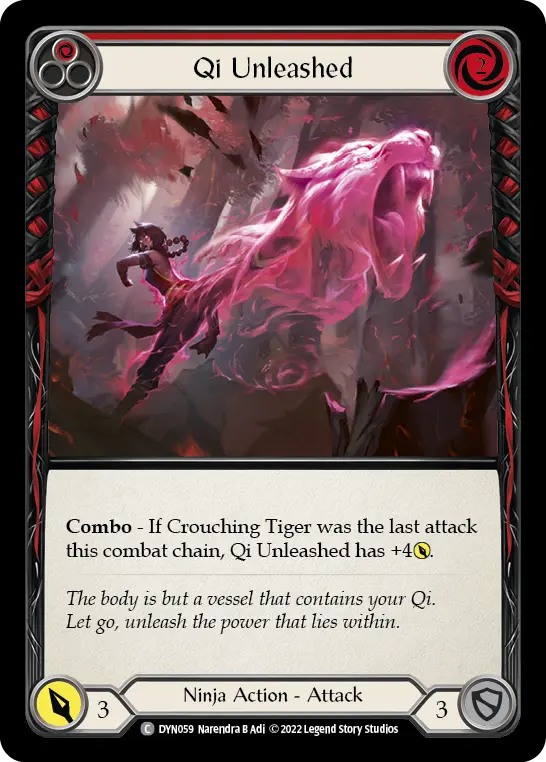
| Combo | If the named card was the last attack this chain, get the bonus | 8.4.1 | Qi Unleashed |
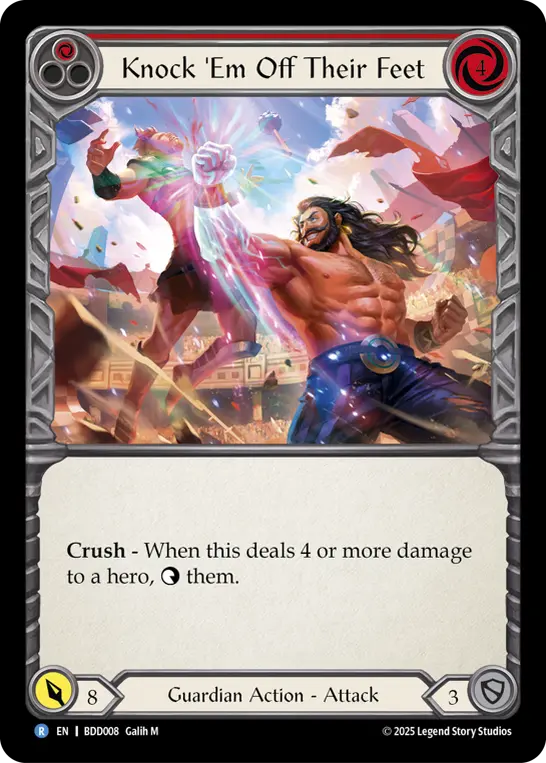
| Crush | Triggers when this deals 4 or more damage, not just on a hit | 8.4.2 | Knock 'Em Off Their Feet |
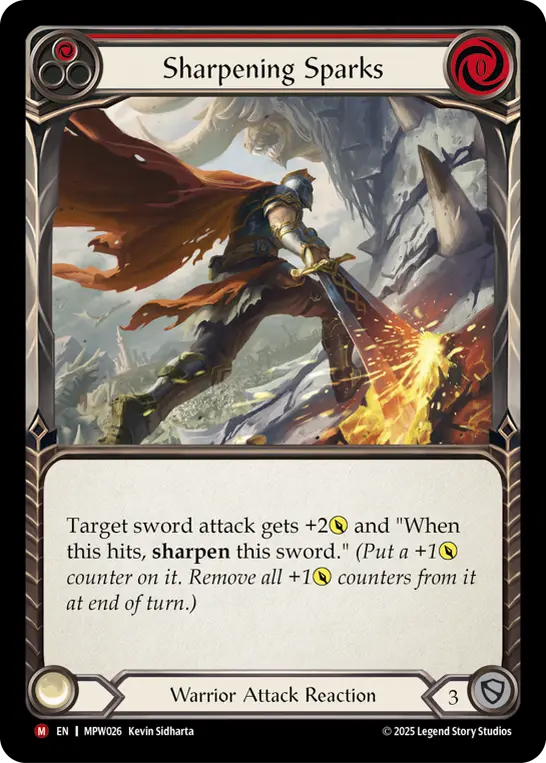
| Sharpen | +1 power counter, removed at the beginning of the end phase | 8.5.58 | Sharpening Sparks |
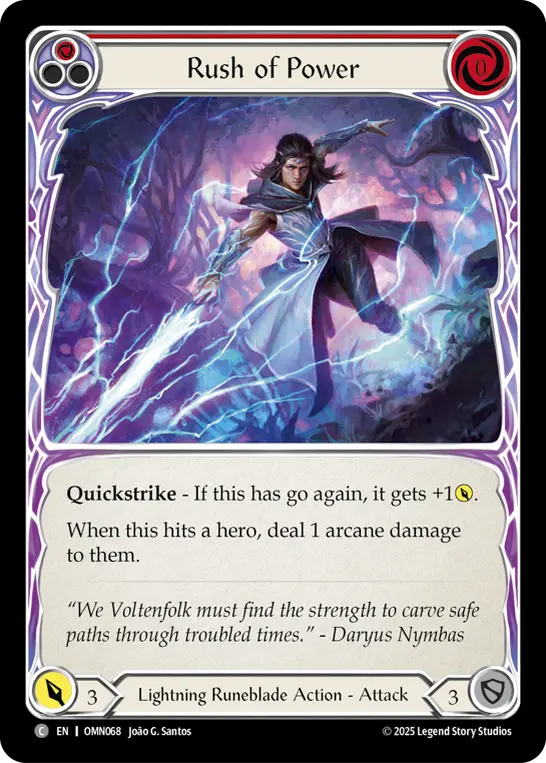
| Quickstrike | "If this has go again, …" | 8.4.20 | Rush of Power |
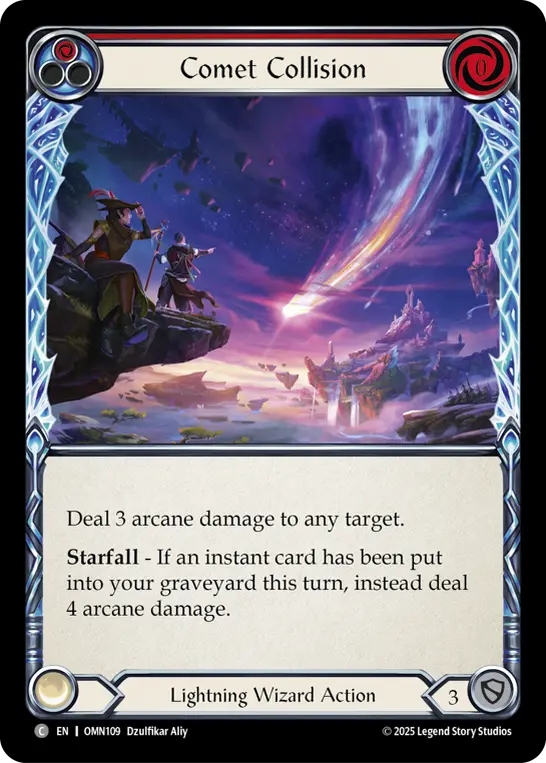
| Starfall | "If an instant has been put into your graveyard this turn, …" | 8.4.21 | Comet Collision |
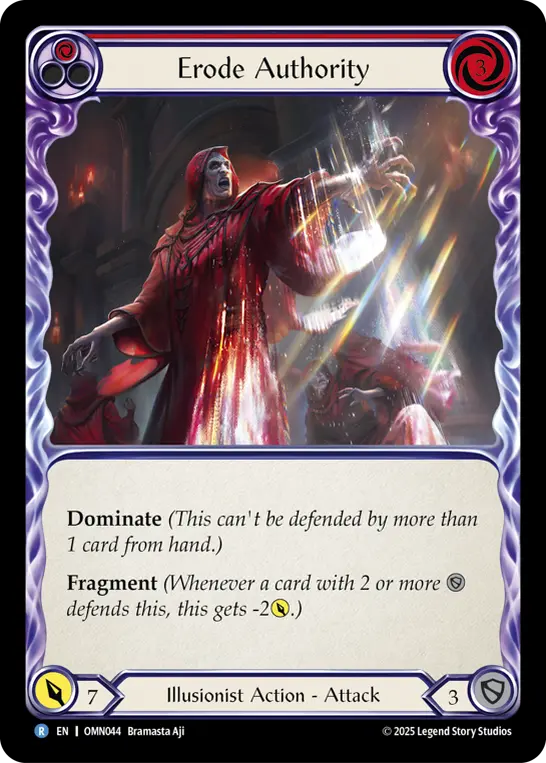
| Fragment | Whenever a card with 2+ defense defends this, -2 power | 8.3.43 | Erode Authority |
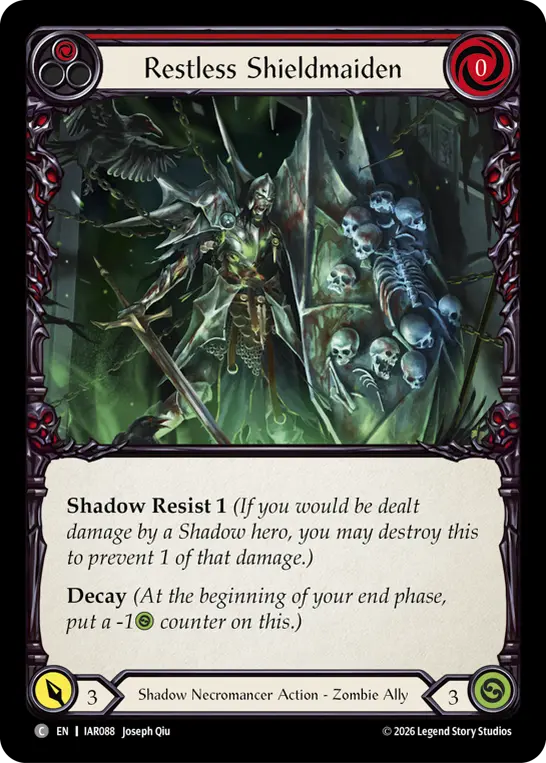
| Decay | At the beginning of your end phase, -1 life counter | 8.3.45 | Restless Shieldmaiden |
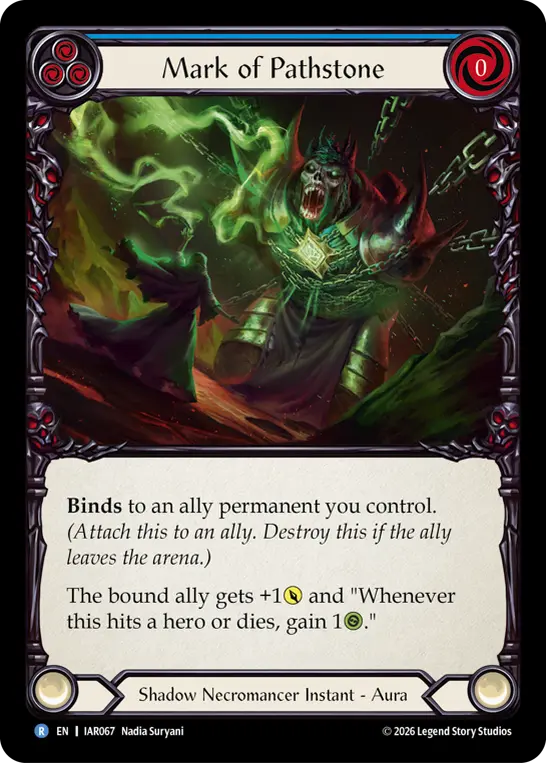
| Bind | Has to bind to another card when it enters. Cleared if it becomes unbound | 8.3.44 | Mark of Pathstone |
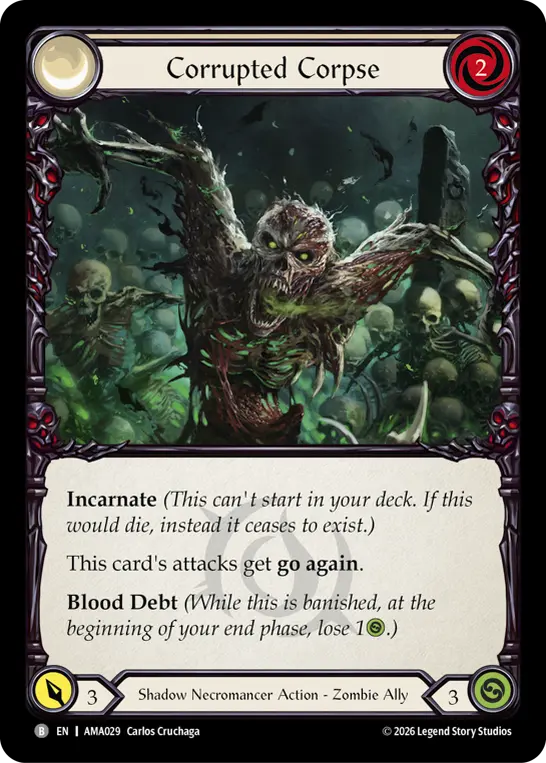
| Incarnate | Can't start in the deck. If it would die, it's removed from the game instead and doesn't count as dying | 8.3.46 | Corrupted Corpse |
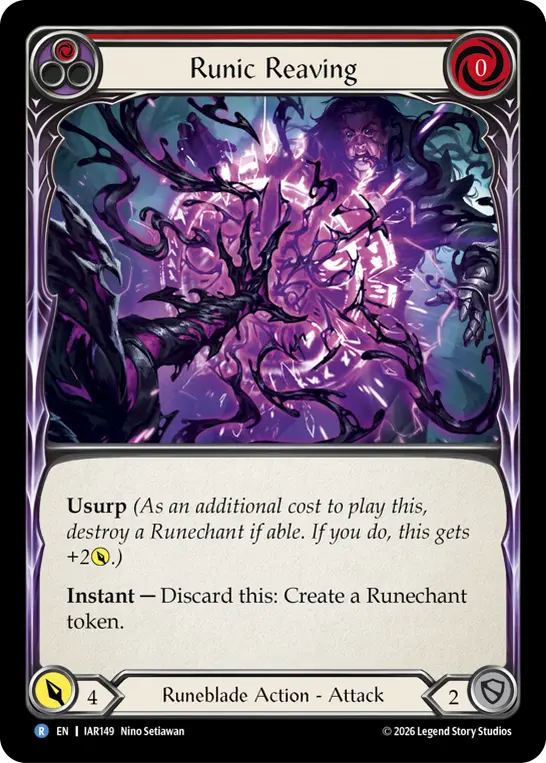
| Usurp | Additional cost: destroy a Runechant if able. If you do, +2 power | 8.3.49 | Runic Reaving |
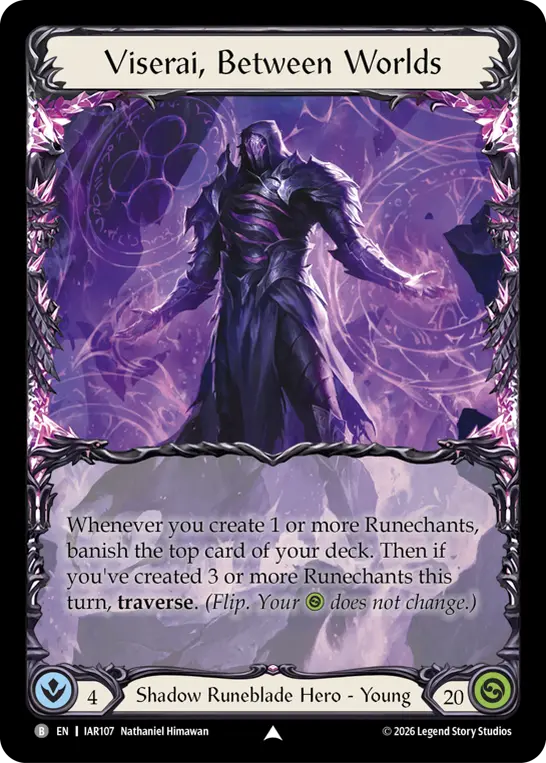
| Traverse | Flip a double-faced card to its other face | 8.5.60 | Viserai, Between Worlds |
| Suspense | Enters with 2 suspense counters, loses one each start of turn, and is destroyed at 0 | 8.3.42 | To Be Continued... |
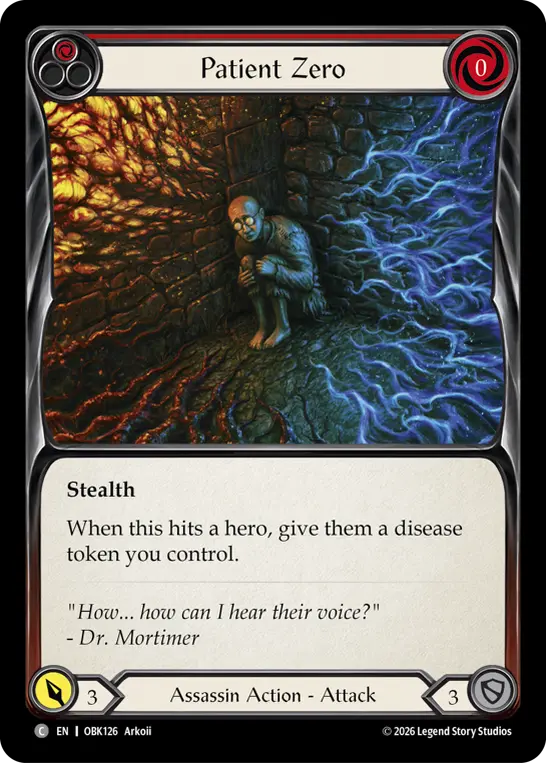
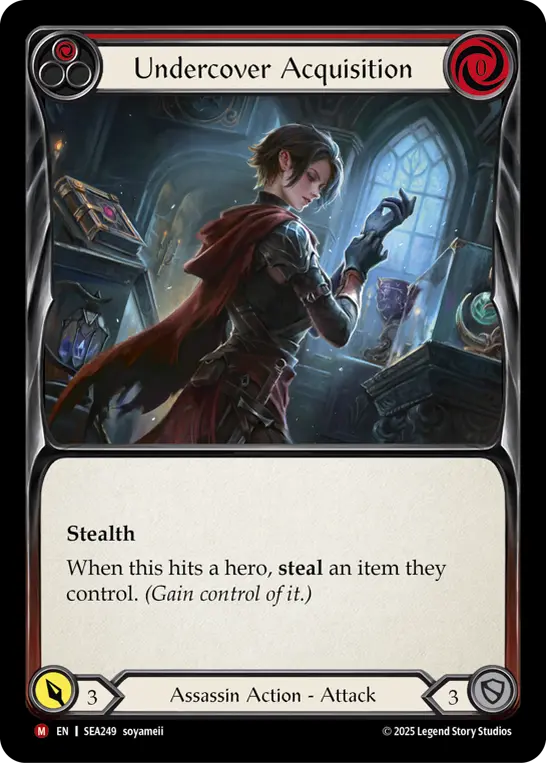
| Give / Steal | The player gains control of the object | 8.5.53–54 | Patient Zero, Undercover Acquisition |
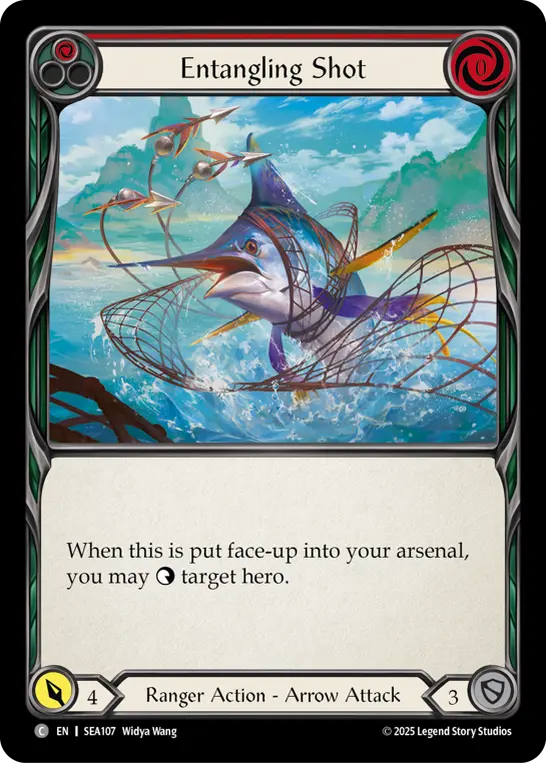
| Tap | Turn a permanent sideways. Tapping a tapped permanent fails | 8.5.55 | Entangling Shot |
Numbers and symbols
Card text uses these symbols (CR 1.12.4). In the text-only rules documents
they appear as the letter in braces, like {p}.
| Symbol | Text | Meaning |
|---|---|---|
|
{p} |
Power. Also used for physical damage |
|
{d} |
Defense |
|
{r} |
Resource. Each one is 1 resource point |
|
{c} |
Chi. Pays resource costs too, and is spent first |
|
{h} |
Life |
|
{g} |
Also life. Newer cards' text usually writes it this way; the icon is the same |
 |
{i} |
Intellect: how many cards you draw up to |
 |
{t} |
Tap a permanent |
 |
{u} |
Untap a permanent |
- Fractions round toward zero: 3.5 becomes 3, and -3.5 becomes -3 (CR 1.12.1a).
- An undefined X or * counts as 0 (CR 1.12.2–3).
- If an effect asks for a property the object doesn't have (cost on Heart of Fyendal, for example), the object doesn't meet the condition. A number it needs from that missing property is 0 (CR 1.8.7).
- Opposing counters (+1 and -1) both stay on the object (CR 1.15.4).
heygoodbuddy.com is in no way affiliated with Legend Story Studios. Flesh and Blood™ and set names are trademarks of Legend Story Studios®. © Legend Story Studios.